
Views: 0 Author: Site Editor Publish Time: 2025-09-21 Origin: Site
Are you considering replacing your lead-acid battery with a lithium-ion battery? As technology evolves, more people are exploring this shift for better efficiency and longer lifespan.This article will answer whether it's possible to replace lead-acid batteries with lithium-ion alternatives.
We’ll also explore the practicalities, including compatibility, benefits, and potential challenges.By the end of this post, you’ll understand what’s involved in making the switch and if it suits your energy needs.
When replacing a lead-acid battery, the new lithium-ion battery must match the voltage of the system. Lead-acid batteries typically come in 12V, 24V, and 48V configurations. Check whether your system is compatible with lithium-ion batteries at these voltages. If your system uses higher voltages, you might need to connect multiple lithium batteries in series to meet the required voltage.
Lithium-ion batteries, including LiFePO4, are generally smaller and lighter than lead-acid batteries. However, it's essential to ensure that the new lithium battery will fit in the designated space without requiring substantial modifications to the existing setup.
Charging requirements for lithium-ion batteries differ from those of lead-acid batteries. Lead-acid batteries typically need a constant voltage charging system, while lithium-ion batteries require a more advanced charging profile (constant current followed by constant voltage). If your current charger isn't compatible with lithium-ion batteries, you may need to upgrade to one designed for lithium-ion chemistry.
Before replacing the lead-acid battery, assess your system's voltage, capacity, and charging needs. This step will ensure that the new lithium-ion battery fits your energy demands and works smoothly with your existing components.
When selecting a lithium-ion battery, ensure it has the appropriate capacity to meet your power needs. Consider the battery's built-in safety features, such as a Battery Management System (BMS) for overcharge and over-discharge protection. Additionally, check if the battery is suitable for your environment, whether it's outdoor, marine, or off-grid applications.
Proper installation is crucial for optimal performance and safety. Disconnect the lead-acid battery, ensuring no current is flowing, and inspect all cables for wear or damage. Once the new lithium-ion battery is installed, verify the proper connections and ensure that the system operates correctly by checking for any irregularities in charging or discharging.
One of the major challenges in switching from lead-acid to lithium-ion is the higher upfront cost of lithium-ion batteries. While they can last 5-10 times longer than lead-acid batteries, the initial expense can be prohibitive. However, it’s essential to view this as an investment since fewer replacements and lower maintenance costs over time can make lithium-ion batteries more economical in the long run.
Lithium-ion batteries are more sensitive to temperature fluctuations compared to lead-acid batteries. In cold climates, lithium-ion batteries may struggle to charge effectively, whereas lead-acid batteries can still accept low-current charges. This factor should be considered, especially if you plan to use the system in regions with extreme temperatures.
| Temperature Range | Lead-Acid Batteries | Lithium-Ion Batteries (LiFePO4) |
|---|---|---|
| Optimal Operating Temperature | -20°C to 50°C | 0°C to 45°C |
| Charging in Cold Temperatures | Accepts low current charges | Struggles, may need temperature management |
| Cold-Weather Performance | Good | Poor to Moderate |
If you're replacing a lead-acid battery in an off-grid or vehicle system, you must ensure the new lithium-ion battery is compatible with the alternator or solar system. Since lithium-ion batteries charge faster than lead-acid, the alternator may supply excessive current unless properly regulated, which could cause damage. A DC-to-DC converter can help limit current and regulate charging.
Lead-acid batteries have long been the go-to solution for many applications due to their affordability, reliability, and performance in cold conditions. They are still widely used because:
■ Lower initial cost: Lead-acid batteries are far cheaper than lithium-ion alternatives, making them a more accessible option for those on a budget.
■ Proven reliability: Lead-acid technology has been tested over decades and continues to perform well in many situations, including in vehicles, backup power systems, and more.
■ Better in cold environments: Lead-acid batteries can handle extreme cold better than lithium-ion batteries, making them the preferred choice in frigid climates.
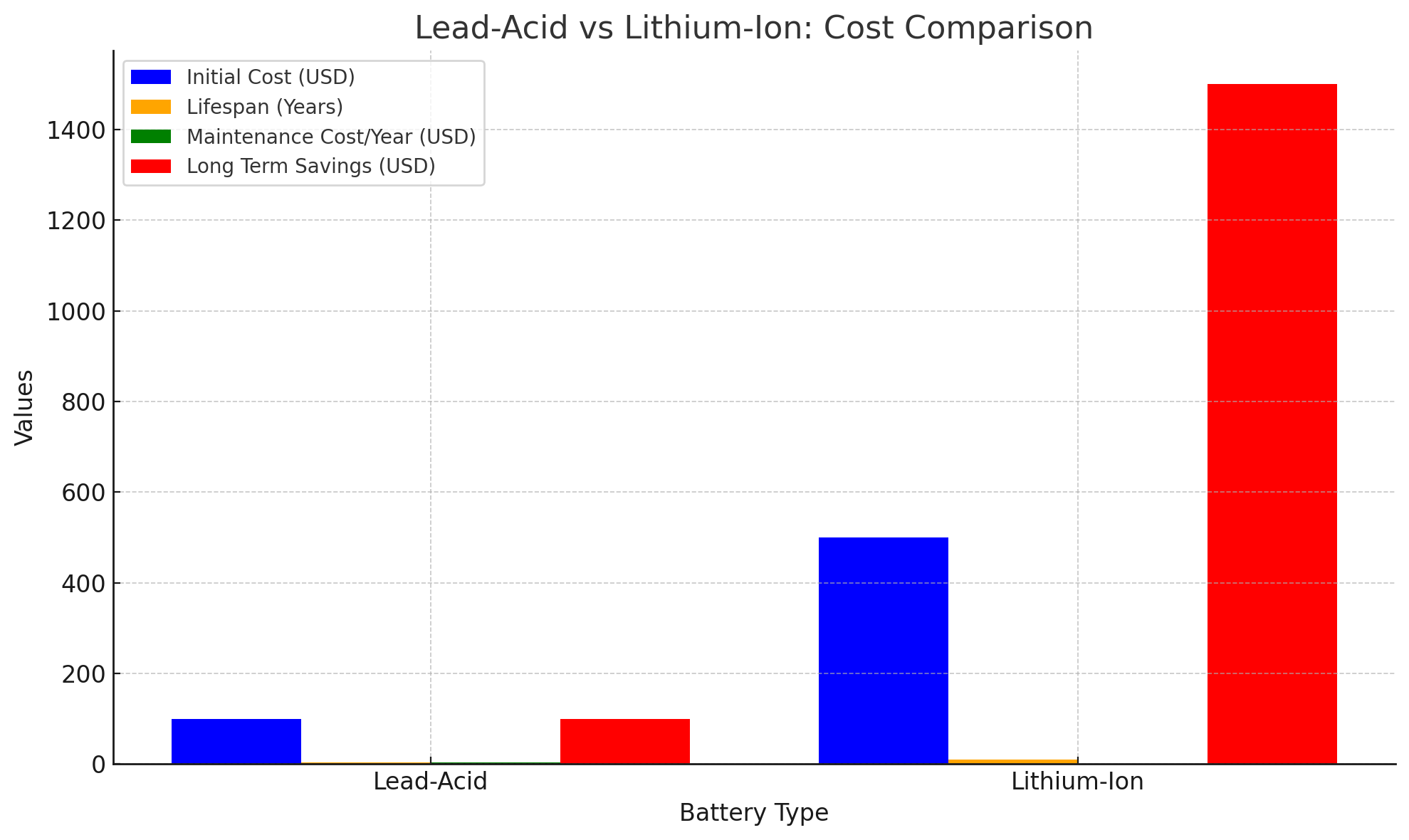
Despite the higher initial cost, lithium-ion batteries offer long-term benefits:
■ Longer lifespan: Lithium-ion batteries can last significantly longer, often 5-10 times the lifespan of lead-acid batteries, making them a more sustainable choice in the long run.
■ Higher energy efficiency: They charge faster, last longer, and maintain a steady output throughout their cycle, even under heavy loads.
■ Lighter and more compact: Lithium-ion batteries are more space-efficient, which is important for applications like RVs, boats, and electric vehicles.
When deciding between lead-acid and lithium-ion batteries, your choice depends on specific needs. Lead-acid batteries are budget-friendly and reliable, especially in cold conditions. However, if you seek long-term savings, higher efficiency, and reduced maintenance, lithium-ion, especially LiFePO4, may be the best option.
While lithium-ion batteries offer excellent lifespan and efficiency, lead-acid batteries still hold value for those on a budget or working in extreme temperatures. Carefully evaluate your energy needs and system compatibility before making a decision.
For those considering an upgrade to lithium-ion technology, Car, Automotive & Maintenance Free Batteries - JUJIANG GROUP offers a range of high-quality products that provide long-term value, efficiency, and minimal maintenance.
A: Yes, you can replace your lead-acid batteries with lithium-ion batteries. However, you need to ensure voltage compatibility, space fit, and the right charging system for the lithium battery.
A: Lithium-ion batteries last longer, charge faster, and are lighter compared to lead-acid batteries. They also require less maintenance and offer more efficient energy usage.
A: Yes, lithium-ion batteries have a higher upfront cost than lead-acid batteries, but their longer lifespan and lower maintenance costs make them more economical over time.
A: Check the voltage and charging system compatibility. Ensure your current system supports the voltage of lithium-ion batteries, and consider upgrading to a lithium-compatible charger.
A: Replacing lead-acid batteries with lithium-ion provides longer life, faster charging, reduced weight, and greater energy efficiency, offering a more reliable and cost-effective solution in the long run.

