
Views: 0 Author: Site Editor Publish Time: 2026-02-12 Origin: Site
Ever wondered if you can charge AGM Car Batteries with a regular charger? Many car owners may not know the risks involved.
In this article, we’ll explore why using the correct charger is essential for your AGM battery's health. You’ll understand how overcharging and undercharging can damage your battery, and why a smart charger is the best option for optimal performance.
An AGM (Absorbed Glass Mat) car battery is a type of lead-acid battery with a sealed design. The electrolyte is absorbed into glass mats, which prevents leakage and improves the battery's overall performance. Compared to traditional flooded batteries, AGM batteries offer several key advantages:
● Sealed Design: This makes them leak-proof, ideal for harsh conditions.
● Vibration Resistance: Perfect for vehicles that face rough terrains, like motorhomes and boats.
● Low Self-Discharge: AGM batteries maintain their charge longer than traditional batteries.
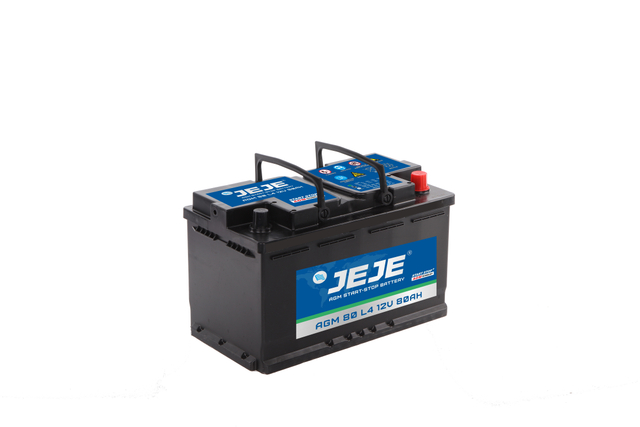
AGM batteries are widely used in automobiles, motorhomes, boats, and even solar systems. Their popularity stems from the fact that they require minimal maintenance and perform reliably over long periods. Key benefits include:
● Low Maintenance: No need to refill water or check electrolyte levels.
● Superior Performance: AGM batteries are engineered for better power delivery and longer life.
● Reliability: With their sealed design, they perform well under high-demand situations.
JEJE (JUJIANG GROUP) manufactures high-quality AGM batteries, catering to both domestic and international markets. Their batteries ensure reliable power delivery for various applications, from vehicles to renewable energy systems.
● Vehicles: Ideal for start-stop systems and quick recharging.
● Motorhomes: Withstand vibrations and rough environments.
● Boats: Provide consistent power with minimal maintenance.
● Solar Systems: Offer reliable energy storage for off-grid applications.
Charging an AGM car battery requires precise voltage control to avoid damage. AGM batteries typically charge at 14.4V–14.7V during the absorption phase, and should be held at 13.5V–13.8V during the float phase. This regulated voltage range ensures the battery is charged fully without causing internal stress.
● Overcharging can lead to excess heat, gas buildup, and permanent damage to the internal structure, such as swelling or electrolyte loss.
● Undercharging results in incomplete charging, leading to sulfation, where the plates lose their ability to store energy effectively.
Charging Phase | Voltage Range | Potential Issues |
Absorption | 14.4V–14.7V | Overcharging, excess heat |
Float | 13.5V–13.8V | Undercharging, sulfation |
Temperature plays a critical role when charging AGM batteries. Temperature compensation ensures the charging system adjusts to different conditions, maintaining efficient charging and protecting the battery.
● High temperatures above 113°F (45°C) cause accelerated chemical activity, leading to gas formation and the potential for overheating.
● Low temperatures below 32°F (0°C) slow the battery's chemical reactions, reducing its charging efficiency.
JEJE AGM batteries are designed to withstand both high and low temperatures, providing reliable performance even in extreme environments. This design ensures they remain stable in vehicles exposed to varied climates.
Temperature Range | Effect on AGM Batteries |
High (Above 113°F) | Overheating, faster degradation |
Low (Below 32°F) | Reduced charging efficiency |
An AGM battery goes through several phases during the charging cycle. Understanding these phases is key to achieving optimal charging and prolonging the battery's life.
1. Bulk Phase: This is the fast charging stage, where the battery is charged at a constant high current until it reaches around 80% capacity.
2. Absorption Phase: The charging current is reduced, and voltage is held constant at the recommended range (14.4V–14.7V), filling the last 20% of the battery.
3. Float Phase: The voltage is lowered (13.5V–13.8V) to maintain the battery’s charge without overcharging, ideal for long-term storage.
Overcharging an AGM car battery with a regular charger can cause serious damage. When excessive voltage is applied, it leads to overheating, swelling, and electrolyte loss. The trapped heat can damage the internal structure, causing the battery to lose capacity permanently. Once the internal pressure builds up, it might force the safety valve to release gases, leading to irreversible damage.
Consequences of Overcharging AGM Batteries:
● Overheating: Increases internal damage.
● Swelling: Leads to battery deformities.
● Electrolyte Loss: Reduces battery capacity and performance.

When AGM batteries are undercharged, sulfation occurs, where lead sulfate crystals form on the battery plates. This leads to reduced capacity and performance. Over time, the sulfation becomes irreversible, shortening the battery lifespan. Using a regular charger that doesn’t meet the required voltage for AGM batteries makes this problem worse.
● Sulfation: Decreases battery efficiency.
● Shortened Lifespan: Requires earlier replacement.
Using a regular charger can lead to excessive heat accumulation, which damages the battery. Without temperature compensation, AGM batteries are exposed to the risks of overheating, gassing, and pressure build-up. This not only reduces performance but can cause permanent damage to the internal components.
Cause | Effect |
Excessive Heat | Can cause swelling and leakage |
Internal Pressure | Leads to gassing and permanent damage |
When it comes to charging AGM car batteries, using the right charger is critical for maximizing performance and lifespan. Smart chargers are designed specifically to address the needs of AGM batteries. These chargers offer multi-stage charging and voltage regulation, ensuring that your battery receives the appropriate charge at each phase.
● Multi-stage charging allows the charger to adjust the charging current and voltage at different stages of the cycle (bulk, absorption, and float).
● Voltage regulation ensures the voltage stays within the optimal range, preventing overcharging or undercharging.
In addition to these features, smart chargers often come with built-in temperature sensors and maintenance modes, which adapt to the battery's needs and preserve its health over time. JEJE batteries, designed with advanced technology, are optimized for use with smart chargers, ensuring efficient charging and a longer lifespan.
● Adaptive regulation for precise voltage and current adjustments.
● Temperature sensors for optimal performance in varying conditions.
● Maintenance modes that prevent overcharging and promote battery health.
An AGM-specific charger is equipped with a special mode tailored to meet the voltage and current needs of AGM batteries. These chargers are designed to ensure that the battery is charged safely and efficiently throughout the charging process.
● The AGM mode adjusts the voltage settings (usually 14.4V–14.7V) during the absorption phase and lowers it during the float phase (around 13.5V–13.8V) to maintain the charge without overcharging.
● This mode ensures even current distribution, which is vital for maintaining the battery’s overall health and avoiding issues like sulfation or overheating.
Having a charger with an AGM mode guarantees that the battery receives the correct amount of charge and is properly maintained, which is not possible with a regular charger.
To get the best performance and lifespan from your AGM car battery, follow these best practices when charging:
● Proper Voltage Settings: Always ensure that your charger is set to the correct voltage range (14.4V–14.7V for absorption and 13.5V–13.8V for float).
● Current Limits: Set the charger to limit the current to 25% of the battery’s capacity. For example, if you have a 100Ah AGM battery, the charging current should not exceed 25A.
● Temperature Monitoring: Always charge your AGM battery in a well-ventilated area and monitor the temperature during charging. Temperatures above 113°F (45°C) can cause damage, while temperatures below 32°F (0°C) reduce charging efficiency.
● Storage Tips: If the battery is not in use for a while, store it at 50-80% charge and connect it to a maintenance charger to keep it in optimal condition.
Charging an AGM car battery with a regular charger can cause serious damage. Overcharging can lead to overheating, swelling, and electrolyte loss, while undercharging causes sulfation, reducing battery life. JUJIANG GROUP offers high-quality AGM batteries designed for maximum performance, ensuring long-lasting power with minimal maintenance.
A: Using a regular charger on AGM car batteries can cause overcharging or undercharging, damaging the battery over time.
A: Overcharging can cause overheating, electrolyte loss, and permanent damage to the battery’s internal structure.
A: AGM chargers ensure correct voltage and current, preventing issues like sulfation and overheating, prolonging battery life.
A: Extreme temperatures can reduce charging efficiency, causing damage. AGM chargers with temperature sensors adjust accordingly for safety.
A: Smart chargers offer multi-stage charging, voltage regulation, and temperature compensation, optimizing AGM battery performance and lifespan.

