
Views: 0 Author: Site Editor Publish Time: 2026-11-19 Origin: Site
Replacing a factory JIS (Japanese Industrial Standard) battery requires matching exact physical dimensions, terminal polarity, and electrical demands. Installing an approximate fit leads to electrical faults, physical damage, or system lockouts. Vehicle owners and fleet managers often struggle to decode JIS battery codes. This confusion results in installing under-specced batteries that cause premature failure, especially in modern vehicles requiring start-stop support. This guide breaks down the exact specifications for the 55D23L Battery. We compare standard versus EFB upgrade paths and provide a technical evaluation framework for selecting a reliable replacement. You will learn how to verify physical fitment, match cold cranking amps, and ensure your vehicle's charging system operates within factory parameters.
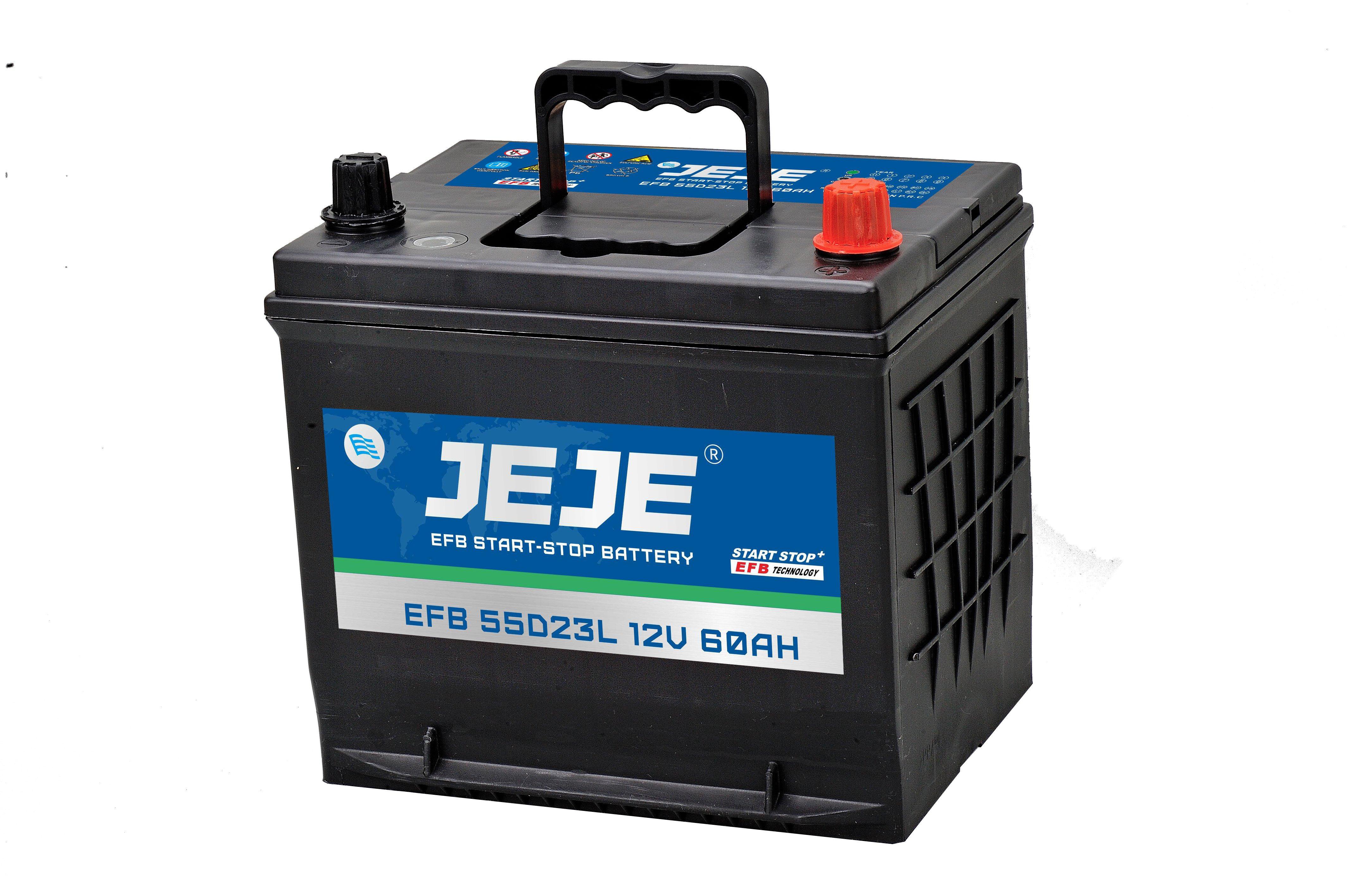
Physical Footprint: The 55D23L conforms to the JIS D23 size (approximately 232mm L x 173mm W x 225mm H) with a Left-hand positive terminal layout.
Baseline Specifications: Standard models deliver 12V and 60Ah, with Cold Cranking Amps (CCA) ranging from 350 (OEM baseline) to 600+ (aftermarket upgrades). Replacements must always meet or exceed OEM minimums.
Technology Requirements: Vehicles equipped with idle start-stop systems strictly require a 55D23L EFB Battery to handle high-frequency cycling and rapid charge acceptance.
Cross-Compatibility: BCI Group 35 is the closest North American physical equivalent, while the 95D23L serves as a direct drop-in capacity upgrade within the exact same casing.
The alphanumeric string on a Japanese Industrial Standard battery provides a precise blueprint of its capabilities and dimensions. Mechanics rely on these characters to avoid installing incompatible units that could damage the alternator or fail to fit the battery tray. Let us break down the exact meaning of each segment.
55 (Performance Rank): This number indicates the battery's overall capacity and cold-cranking performance. It does not represent actual Amp-hours. A higher number means better starting power and reserve capacity. Upgrading from a 55 to an 85 provides noticeably faster engine cranking in winter conditions.
D (Size Class): This letter specifies the width and height of the battery casing. The "D" class measures exactly 173mm in width and 202mm in container height. The total height reaches about 225mm when you include the terminal posts.
23 (Length): This number represents the approximate length of the battery in centimeters. A "23" translates to roughly 232mm. This length dictates whether the battery will sit flat inside the factory plastic tray without crushing the edges.
L (Polarity): This indicates a Left-hand positive terminal orientation. You determine this by positioning the battery so the terminals are closest to your body. The positive post will sit on your left side. Installing an "R" battery by mistake forces you to stretch the factory cables, which often causes wire chafing or prevents connection entirely.
Factory specifications set the baseline for vehicle performance. A standard unit operates at a 12V nominal voltage. Manufacturers typically rate it as a 12V 60Ah EFB Battery or SMF battery, measured at a 20-hour discharge rate. Cold Cranking Amps (CCA) vary significantly between brands. OEM factory batteries, such as original Hitachi units found in Subarus or Nissans, output around 356 CCA. Premium aftermarket replacements push this output between 500 and 600 CCA.
Reserve Capacity (RC) averages 100 minutes for this group size. This metric tells you how long the vehicle can run essential accessories if the alternator fails. The battery weighs approximately 15.3kg to 15.6kg. It utilizes standard SAE top posts for terminal connections. The golden rule of replacement is simple. Your new battery must always meet or exceed the vehicle's factory minimum capacity and CCA rating. Failing to do so places severe strain on the alternator, leading to premature diode failure.
Mechanics often see the results of under-specced batteries in the shop. A customer installs a cheaper battery with 300 CCA in a vehicle requiring 450 CCA. The starter motor draws more current than the battery can comfortably supply, causing severe voltage drops. These drops trigger warning lights on the dashboard, disable power steering modules, and can even corrupt the engine control module data during cranking.
Specification Parameter | Standard OEM Measurement | Premium Aftermarket Range | Field Impact |
|---|---|---|---|
Nominal Voltage | 12V | 12V | Ensures compatibility with standard automotive electrical systems. |
Amp Hours (20HR) | 60Ah | 65Ah - 70Ah | Higher Ah ratings support dashcams and security systems during parking. |
Cold Cranking Amps (CCA) | 350 - 400 CCA | 500 - 650 CCA | Higher CCA guarantees reliable engine starts in sub-zero temperatures. |
Reserve Capacity (RC) | 90 Minutes | 100 - 110 Minutes | Provides a longer safety window to drive to a shop if the alternator dies. |
Dimensions (L x W x H) | 232mm x 173mm x 225mm | 232mm x 173mm x 225mm | Exact dimensions prevent casing damage from incorrect hold-down brackets. |
Weight | ~15.3 kg | ~16.0 kg | Heavier batteries generally contain thicker lead plates for better durability. |
Traditional SMF batteries use standard lead-acid chemistry housed in a sealed container. They work best for older vehicles without start-stop technology. Examples include early Honda Accords, Toyota Camrys, or Mitsubishi Mirages. These vehicles run simple electrical systems without heavy parasitic loads. The alternator charges the battery continuously while the engine runs, keeping the voltage stable.
The primary trade-off involves cost versus durability. SMF units offer a lower upfront cost and reliable standard cranking. However, they degrade rapidly if subjected to deep cycling or frequent short trips. If you drive less than five miles a day, the alternator never fully recharges an SMF battery. This leads to sulfation, where lead sulfate crystals harden on the plates, permanently reducing capacity and causing early failure.
Modern automotive electrical systems demand robust energy storage. The 55D23L EFB Battery handles these harsh environments. It serves as the mandatory replacement for modern vehicles equipped with idle start-stop systems. Vehicles like the Nissan Elgrand E52 or late-model Mazda 3s rely heavily on this chemistry. EFB technology incorporates polyfleece scrims on the positive plates. This material holds the active lead paste in place, preventing shedding during constant engine restarts at traffic lights.
The performance outcomes are highly measurable in the field. An EFB Start Stop Battery offers twice the cyclic lifespan of standard flooded batteries. It also provides superior dynamic charge acceptance. This means the battery absorbs alternator current much faster during short driving intervals. Risk mitigation is critical during replacement. Never downgrade from an EFB to a standard SMF battery. Doing so causes the replacement battery to fail within months. The aggressive charging algorithms of start-stop alternators will literally boil a standard SMF battery dry, warping the internal plates and causing a dead short.
Finding an exact JIS battery in North America sometimes proves challenging depending on your local parts store inventory. The Battery Council International (BCI) Group 35 serves as the closest physical equivalent. Group 35 batteries share nearly identical dimensions. They measure approximately 230mm in length, 175mm in width, and 225mm in height. They also share the exact same left-positive terminal layout, allowing factory cables to reach without modification.
You must observe strict fitment warnings when using a Group 35 as a 55D23L Battery Replacement. Verify that the vehicle's factory hold-down bracket accommodates the slight millimeter variances. A bracket that fits too tight will warp the Group 35 casing under under-hood heat. A bracket that fits too loose allows excessive vibration. Vibration acts as the primary killer of lead-acid batteries, snapping the internal welds connecting the cell groups and causing sudden, catastrophic failure.
Vehicle owners often seek more power without modifying the factory battery tray. The upgrade concept relies on the JIS performance rank system. The "85" or "95" indicates a higher performance rank housed within the exact same D23L physical casing. You get more lead and higher density active material in the exact same footprint. The installation requires zero modifications to the cables, trays, or brackets.
This upgrade path proves ideal for specific field applications. Vehicles operating in extreme cold climates benefit greatly from the increased CCA, ensuring the engine turns over at -20 degrees. Vehicles modified with aftermarket electronics, such as winches, air compressors, or high-draw audio systems, require the higher reserve capacity found in a 95D23L. The extra capacity prevents the voltage from dropping below 10.5V during heavy winching operations, which protects the vehicle's sensitive control modules from shutting down mid-recovery.
Quality control dictates battery longevity. When sourcing from a JIS Car Battery Supplier, you must verify their manufacturing standards. Ensure the manufacturer holds ISO 9001 and IATF 16949 certifications. These certifications guarantee OEM-level quality control. They ensure the factory performs rigorous vibration resistance testing and automated plate pasting. Consistent manufacturing prevents internal short circuits. Hand-pasted plates often suffer from uneven thickness, leading to hot spots, uneven charging, and premature cell failure.
A warranty reflects the manufacturer's confidence in their engineering. Look for industry-standard coverage before making a purchase. A minimum 24- to 36-month warranty is standard for SMF units. You should expect 36- to 48-month warranties for EFB variants due to their robust construction. Differentiate between pro-rated warranties and free-replacement guarantees. Pro-rated warranties offer diminishing value over time, meaning you still pay out of pocket if the battery fails in year two. A free-replacement guarantee provides a brand-new unit at zero cost if failure occurs within the specified window.
Battery chemistry degrades even when sitting idle. Batteries self-discharge and sulfate while sitting on warehouse shelves. Evaluate your source based on inventory turnover. Learn to read battery date codes. Manufacturers usually stamp these codes into the plastic casing or print them on a top label. The code often uses a letter for the month (A for January, B for February) and a number for the year (3 for 2023, 4 for 2024). Ensure the unit you purchase is less than six months old. Installing a stale battery drastically reduces its operational lifespan right out of the gate.
Proper preparation prevents costly electrical damage and frustrating lockouts. Always lower the driver's window enough to access the cabin before disconnecting the negative terminal. Modern vehicles often trigger central locking or security systems upon power loss. Keep the keys in your pocket, not in the ignition. Use a memory saver plugged into the OBD2 port if you want to retain radio presets, seat memory, and engine idle learning data. Losing the idle learning data can cause the engine to stall at stoplights until the computer relearns the throttle body position.
Corrosion creates electrical resistance, mimicking a dead battery or a failing starter. Inspect the existing battery cables for heavy white or blue corrosion before installation. Clean the clamps thoroughly with a wire brush. Neutralize any battery acid with a baking soda and water solution. Dry the clamps completely. Once you connect the new SAE terminals and torque them to specification, apply a generous coat of dielectric grease. This grease seals out moisture and battery off-gassing, preventing future oxidation and voltage drops.
Modern vehicles manage battery charging dynamically to improve fuel economy. A new battery replacement must be paired with a BMS reset via a professional OBD2 scanner. The vehicle's computer adjusts the alternator output based on the battery's age and internal resistance. As a battery ages, it requires higher voltage to charge. Failing to register the new battery causes the alternator to overcharge the fresh unit. The computer assumes it is still charging the old, degraded battery. This overcharging boils the electrolyte and drastically shortens the life of your new EFB unit.
Mechanical security holds just as much importance as clean electrical connections. Ensure the bottom lip or top bracket secures the heavy weight firmly. Do not overtighten J-hooks. Applying too much torque bends the top bracket and cracks the plastic battery casing, causing acid leaks. Excessive vibration remains the leading cause of internal plate failure in lead-acid batteries. A loose battery bounces over bumps, destroying the internal grid structure. It will fail prematurely, regardless of its premium internal quality.
Follow these actionable next steps to secure your vehicle's electrical system and execute a flawless battery replacement:
Check your vehicle's owner's manual to confirm idle start-stop requirements and verify the exact OEM battery specifications.
Test your current battery's CCA rating with a digital load tester to establish a baseline for your replacement purchase.
Source your replacement from a certified manufacturer to ensure fresh inventory and robust free-replacement warranty support.
Clean your terminal clamps thoroughly with a wire brush and apply dielectric grease immediately after torquing the connections.
Perform a BMS reset using a bidirectional OBD2 scanner to calibrate the alternator charging profile for the new battery.
A: Both batteries share the exact same physical dimensions (D23) and left-hand positive polarity (L). The difference lies in the performance rank. The 85D23L contains denser internal plates, offering higher Cold Cranking Amps (CCA) and Reserve Capacity (RC) than the standard 55D23L, making it ideal for cold climates.
A: Yes, BCI Group 35 serves as the closest North American equivalent. It shares nearly identical dimensions and the same terminal polarity. You must verify your vehicle's hold-down bracket, as slight millimeter differences in the casing can affect secure fitment and lead to vibration damage.
A: If your vehicle features an idle start-stop system, you strictly require an EFB battery. Standard SMF batteries cannot handle the frequent cycling and rapid charge acceptance required by these systems. Installing a standard battery in a start-stop vehicle guarantees premature failure within months.
A: The standard dimensions measure approximately 232mm in length, 173mm in width, and 225mm in total height, including the terminal posts. These measurements conform strictly to the JIS D23 size classification, ensuring it fits flat within the factory battery tray.
A: A standard SMF battery typically lasts 3 to 4 years under normal driving conditions. An EFB variant lasts 4 to 6 years, even when subjected to the heavy cyclic demands of start-stop systems, provided the alternator functions correctly and the terminals remain clean.
A: The "L" stands for Left. It indicates that the positive terminal sits on the left side when you position the battery so that the terminal posts are closest to your body. This ensures the factory cables reach the posts without stretching.
A: Yes, if your vehicle utilizes a Battery Management System (BMS). You must reset the BMS using an OBD2 scanner. This process tells the computer to adjust its charging algorithm for a new battery, preventing the alternator from overcharging and destroying the fresh unit.

