
Views: 0 Author: Site Editor Publish Time: 2026-07-13 Origin: Site
A battery can slide into the tray and still be the wrong replacement. Case size is only one part of fitment; terminal position, polarity, hold-down design, battery chemistry, and electrical performance also determine whether the vehicle can use it correctly.
Choosing an AGM car battery becomes more complicated in vehicles with start-stop systems or battery sensors, where the wrong specification may affect charging behavior or require calibration after replacement. The sections below show how to compare physical dimensions, starting ratings, intended duty, and vehicle-specific setup requirements before a purchase turns into an installation problem.
Product listings help compare replacement candidates, but they are a poor starting point. Begin with the owner’s manual, the original battery label, and a VIN- or model-specific replacement catalogue. These references establish whether the vehicle was designed for AGM, EFB, or another lead-acid construction, along with its expected size and electrical ratings. Vehicle-specific fitment information should always take priority over general shopping filters or assumptions based on appearance.
Start-stop operation, regenerative charging, battery monitoring, and heavy standby loads make this check especially important. Vehicles equipped with these systems may require a start-stop AGM car battery that can accept charge quickly, withstand frequent restart cycles, and work correctly with the vehicle’s charging strategy. Replacing the original unit with a battery of different construction can lead to poor charging behavior or reduced service life. Choose AGM because the vehicle requires or supports it, not simply because the technology sounds like a premium upgrade.
An AGM car battery group code communicates more than basic case measurements. BCI, DIN/EN, and JIS classifications can identify dimensions, terminal arrangement, polarity, mounting features, and application characteristics. Compare the exact size designation first, then verify total height, base ledge, tray clearance, and hold-down style.
A battery case may sit inside the tray and still be unsafe. The base clamp might not engage, allowing the unit to move during vibration, braking, or cornering. Excessive height can reduce clearance between the positive terminal and the hood, while a case that is too small may not work with the original restraint. A correct fit should not require improvised spacers, altered brackets, or pressure from surrounding components.
Positive and negative posts must be on the correct sides even when two batteries share the same dimensions. A reversed layout can leave leads too short, force cables across the case, or place a live positive connection too close to vehicle bodywork. Standard top posts, threaded studs, side connections, and model-specific adapters are not interchangeable simply because the battery has the right voltage and size.
Cables should reach naturally without stretching, crossing, or touching sharp and hot components. Check the available space for terminal covers, sensor connectors, and the hood before completing the installation. When the battery is mounted in a trunk, cabin, under a seat, or inside another enclosed compartment, confirm that the vent port aligns with the vehicle’s vent hose. Correct venting is part of fitment, not an optional accessory.
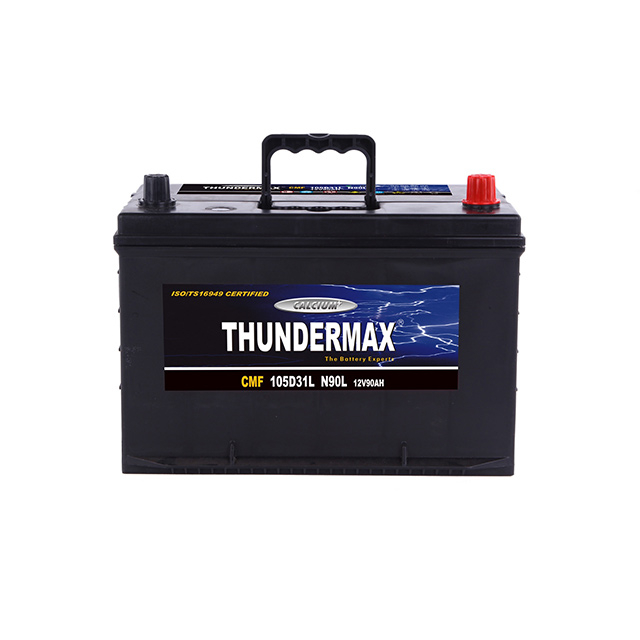
Battery terminology often overlaps, but common lead-acid labels are not synonyms. A sealed or maintenance-free battery may use AGM, gel, valve-regulated, or another construction. SLA describes a broad sealed lead-acid category, while AGM identifies a design that holds electrolyte in absorbent glass-mat separators. Battery chemistry should be confirmed from the technical specification rather than inferred from the case, voltage, or marketing description.
A 12V 80Ah DIN80 SLA Vehicle Starting Battery illustrates how specifications should be read separately. Its 12V rating identifies nominal voltage, 80Ah indicates capacity, DIN80 refers to its size class, and 750+ CCA relates to starting output. Those figures are useful when evaluating electrical and physical compatibility, but the term SLA alone does not confirm AGM construction. Buyers who specifically require an AGM car battery should look for an explicit AGM designation and vehicle-fitment confirmation.
This distinction prevents two opposite errors. One is replacing an original AGM unit with another sealed battery that uses a different construction. The other is paying more for a product presented as premium without confirming whether its internal design matches the vehicle. Fitment decisions should rely on precise specifications rather than broad labels.
Voltage and sealed construction do not determine a battery’s intended job. Starting batteries deliver a large burst of current for a short engine-cranking event, after which the alternator replenishes the energy used. Deep-cycle batteries are designed for longer, repeated discharge periods that support lighting, appliances, pumps, and other auxiliary equipment.
A Deep-Cycle Maintenance-Free Battery for RV Systems provides a clear contrast. Its RV-oriented duty makes it suitable for sustained auxiliary loads, but that does not make it an appropriate automotive starter simply because it is sealed, maintenance-free, or operates at 12V. Even two batteries built with AGM technology may use different plate designs and discharge characteristics.
Starting, start-stop, dual-purpose, and deep-cycle applications should therefore be treated as separate selection categories. The correct AGM car battery must match both the required chemistry and the vehicle’s operating duty. Choosing by voltage alone can place the wrong type of battery in a demanding starting application.
For an AGM car battery, nominal voltage is only the first selection filter. Most passenger-car batteries carry a 12V rating, yet they can differ substantially in starting output, capacity, reserve time, construction, terminal layout, and physical size. Selecting by voltage alone ignores nearly every characteristic that determines whether the replacement will operate correctly.
An underpowered battery may fit perfectly but crank slowly in cold weather or after electrical accessories have been used. A higher-capacity option is not automatically an upgrade when its dimensions, chemistry, or charging requirements fall outside the vehicle’s approved specification. Stay within the recommended range unless reliable model-specific information permits a different configuration.
Compatibility should be treated as a complete package. Voltage, starting performance, capacity, size, polarity, and application must work together. Passing one requirement does not compensate for failing another.
Cold cranking amps describe a battery’s ability to deliver starting current under standardized low-temperature conditions. For buyers, CCA helps determine whether the battery can turn the engine reliably in cold weather. Engine size, climate, oil viscosity, battery condition, and state of charge can all influence how much starting performance is needed.
Meet or exceed the vehicle manufacturer’s minimum CCA requirement, particularly in regions with freezing winters. Falling below that level can produce sluggish starts when battery output naturally decreases in low temperatures. The problem may become more noticeable after short trips, extended parking, or repeated use of electrical accessories.
The largest CCA figure is not automatically the best choice. Extra starting output cannot correct reversed polarity, an unsuitable case, the wrong battery chemistry, or an incompatible charging system. A high-CCA unit that cannot be secured in the tray or connected without cable strain remains the wrong battery.
Ratings should also be compared under the same testing standard. Similar-looking figures may come from different test methods and should not be treated as directly equivalent without verification.
CCA, ampere-hours, and reserve capacity answer different fitment questions. Ampere-hours describe stored electrical capacity under a defined test rate. Reserve capacity indicates how long a fully charged battery can support a specified electrical load before reaching a defined voltage. CCA focuses on short-duration engine-starting performance.
Use the figures together:
● CCA addresses cold starting.
● Ah expresses stored capacity under a specified test method.
● Reserve capacity indicates how long a defined load can be supported.
● Fitment data connects those ratings to an approved case, chemistry, and vehicle application.
The DIN80 starting battery demonstrates why these ratings should not be combined into one buying criterion. Its 80Ah capacity and 750+ CCA represent separate performance characteristics. A buyer should compare both figures with the original specification while also checking dimensions, terminal position, technology, and mounting design.
Two batteries with identical Ah ratings may offer different cold-starting or reserve performance. Factory electronics, security systems, parking-mode equipment, heated accessories, and start-stop operation can also increase demand while the engine is off. Frequent short journeys may leave insufficient time to restore energy used during starting and accessory operation.
These conditions support choosing the specified battery and checking the health of the charging system. They do not justify selecting a larger battery without confirming that the vehicle can accommodate and manage it correctly.

Mechanical installation may be only one part of an AGM car battery replacement. Some vehicles estimate battery condition and adjust charging behavior according to battery age, capacity, chemistry, temperature, and state of charge. Depending on the model, a new battery may require registration, coding, calibration, or a defined relearning period.
Registration normally tells the vehicle that a new equivalent battery has been installed. Coding may be necessary when an approved change in capacity or technology requires updated charging settings. Calibration or relearning allows the battery sensor and start-stop system to establish a new operating baseline.
These procedures are not required for every vehicle. Some models need a diagnostic tool, while others relearn battery condition after a specific driving, locking, or vehicle-sleep sequence. Start-stop operation may also remain temporarily unavailable while the system evaluates the replacement battery.
Confirm the procedure before purchasing the battery or planning a DIY installation. Knowing whether specialist equipment is needed prevents the vehicle from being left with an incomplete replacement process after the physical work has already been finished.
Before the first start, inspect the completed installation carefully. The battery should sit flat, and the hold-down must secure the case without distorting it. Polarity should match the vehicle, while terminals must be fully seated and tightened without damaging the posts. Reconnect the vent hose where required, replace protective covers, and confirm that cables are not stretched or rubbing against nearby components.
After starting the engine, check for normal cranking and stable electrical behavior. Charging warnings, repeated infotainment resets, flickering lights, or unavailable start-stop operation can indicate a connection, sensor, charging, or relearning issue. Some functions may remain temporarily unavailable during an approved calibration period, but persistent problems require further inspection.
Stop using the battery and arrange professional diagnosis when any of these signs appears:
● Unusual heat, chemical odor, swelling, leakage, or case damage.
● A loose hold-down, exposed positive terminal, or strained cable.
● Persistent slow cranking, warning lights, or electrical resets.
● An incomplete registration, coding, or calibration procedure.
These symptoms do not automatically prove that the replacement battery is defective. They call for a review of the specification, terminal contact, charging-system performance, parasitic loads, and electronic setup. A correctly selected AGM car battery functions as part of an integrated starting and charging system, not as an isolated component that only needs to fit inside the tray.
Correct battery fitment depends on more than whether the case fits the tray. Battery technology, size code, polarity, terminal layout, CCA, capacity, venting, and any registration or sensor procedure must all match the vehicle. Checking these details before purchase reduces installation problems, electrical faults, and premature battery wear.
JUJIANG POWER GROUP Co., Ltd. supplies AGM, EFB, and maintenance-free starting batteries with model-specific specifications that help buyers compare physical and electrical requirements efficiently. The right AGM car battery matches the vehicle’s mechanical layout, starting demand, and charging system—not simply the option with the highest rating.
A: Check the owner’s manual, original battery label, or vehicle-specific fitment data. Match the battery technology, group size, terminal layout, polarity, CCA, capacity, hold-down, and venting.
A: The battery may not sit securely, the cables may not reach, or the terminals could contact the hood. Incorrect fitment may also cause poor starting and electrical problems.
A: Do not downgrade unless the vehicle manufacturer permits it. Start-stop and battery-managed vehicles may require AGM construction to handle repeated cycling and the original charging strategy.
A: A higher CCA rating may improve cold-starting reserve, but it cannot correct the wrong chemistry, case size, polarity, terminals, or mounting design. Fitment requirements still come first.
A: Some vehicles require battery registration, coding, sensor calibration, or a relearning period after replacement. Check model-specific instructions before installation because the procedure varies between vehicles.

