
Views: 0 Author: Site Editor Publish Time: 2026-07-06 Origin: Site
Requesting a battery quote can seem simple—send the voltage, capacity, and order quantity, then compare prices. In practice, those details are rarely enough. Vehicle fitment, terminal layout, cranking performance, operating conditions, branding, packaging, testing, and delivery terms can all change the final specification and cost. A well-prepared OEM car battery RFQ helps suppliers price the same scope instead of filling gaps with assumptions. The sections that follow show what buyers should organize before quotation, so they can reduce revisions, compare offers more fairly, and move from sampling to production with fewer surprises.
Begin by identifying the vehicle category: passenger car, SUV, pickup, light commercial vehicle, heavy truck, bus, agricultural machine, or off-road equipment. Add the vehicle model, production year, engine displacement, fuel type, electrical-system voltage, and engine code when available. A description such as “battery for Japanese cars” or “truck starting battery” is too broad for a dependable OEM car battery quotation.
The commercial application also matters. A battery supplied for original vehicle installation may require different validation, traceability, and documentation from a private-label replacement product. Fleet-maintenance programs may prioritize availability and standardized SKUs, while distributors may need a broader range of sizes, polarities, labels, and cartons.
State whether the project supports vehicle assembly, aftermarket replacement, fleet servicing, or wholesale distribution. This context allows the manufacturer to recommend an existing platform when suitable instead of automatically treating every inquiry as a fully customized development.
Two vehicles with similar engines can place different demands on their batteries. Buyers should describe expected starts per day, typical journey length, parking duration, seasonal use, and the time available for recharging between starts. Vehicles that remain parked for long periods may also require closer attention to storage conditions and self-discharge expectations.
List electrical loads that remain active while the engine is off, such as telematics, alarms, refrigeration, lighting, communication equipment, entertainment systems, or cabin accessories. Confirm whether the vehicle has conventional starting, automatic start-stop, a smart alternator, regenerative charging, or a dual-battery arrangement.
Commercial vehicles deserve particular care. Long idling periods, repeated starts, overnight cabin loads, and partial discharge can create a duty profile that differs sharply from normal passenger-car use. These details help the supplier determine whether the requested capacity and construction are appropriate.
Name the destination country or region before requesting certificates, performance labels, or packaging. The sales market can affect battery-size conventions, warning text, recycling marks, language requirements, product documentation, and customer-specific approval procedures.
Explain how the product will reach the user. Batteries intended for vehicle factories, retail stores, wholesale warehouses, and fleet contracts may require different labels, cartons, pallet configurations, and traceability records.
Separate mandatory market requirements from optional commercial preferences. A buyer who requests “all international certificates” may receive an unnecessarily expensive quotation or an unclear list of documents. A better RFQ identifies the required market, intended sales channel, customer standards, and documentation expected with each shipment.
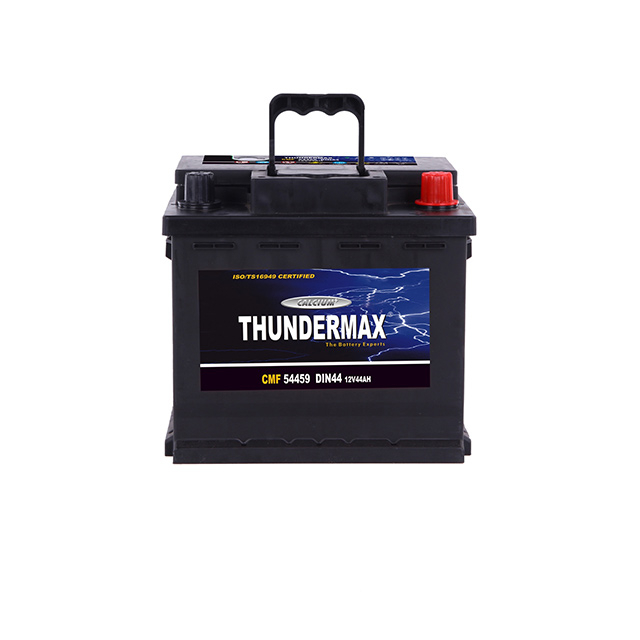
A capacity rating does not establish physical compatibility. The RFQ should identify the relevant sizing system, such as JIS, BCI, DIN, or a customer-controlled drawing. Battery group classifications can account for voltage, maximum overall dimensions, terminal arrangement, performance, and other features that affect vehicle fit.
Record the length, width, case height, and total height in one agreed orientation. Include terminal type, terminal diameter, positive-terminal position, polarity, hold-down structure, vent location, handle envelope, and terminal-cover clearance. Maximum acceptable weight should also be stated when the tray, bracket, or vehicle balance creates a practical restriction.
Nominal dimensions without tolerances may still cause problems in production. The vehicle team should define the minimum available installation space, while the battery drawing should show the maximum permitted product envelope. Cables, brackets, coatings, covers, and assembly variation must be considered before an OEM car battery sample is approved.
Buyer Input | Details to Include | Risk if Missing |
Battery standard | JIS, BCI, DIN, or drawing number | Incorrect case format |
Physical envelope | Case dimensions, total height, and tolerances | Tray or cover interference |
Terminals | Type, size, polarity, and position | Cable mismatch |
External features | Handle, vents, caps, and hold-down | Installation or service problems |
Photographs often reveal information that a short specification misses. Buyers should provide clear images of the existing battery, tray, terminals, cable directions, hold-down bracket, nearby components, and intended removal path. For a new vehicle project, a two-dimensional drawing, three-dimensional model, or measured installation envelope is more useful than a model name alone.
The VISCA POWER N100L is a 12V 100Ah Japanese-standard maintenance-free battery with an overall dimensional specification of 408 × 172 × 211 × 231 mm. Its model designation, capacity, terminal arrangement, and physical envelope must be considered together rather than treating “100Ah” as a complete fitment description.
A hermetically sealed 12V 44Ah CMF 54459 truck-battery configuration measures 206 × 174 × 189 mm. This contrast demonstrates why the word “truck” cannot indicate one universal case size, terminal layout, or capacity.
Installation evidence should also show cable bend space, tool access, mounting orientation, and the direction in which the battery will be removed. These details reduce the risk of receiving an electrically acceptable sample that cannot be installed or serviced efficiently.
Voltage and amp-hours are necessary inputs, but they do not describe starting ability or reserve performance. A complete OEM car battery RFQ should include the required cold cranking amps, cranking amps where applicable, reserve capacity, minimum starting current, charge acceptance expectations, and storage-performance target.
Each figure should have a defined role. The buyer must distinguish between a minimum acceptance limit, a target production value, a label claim, and a figure copied from an existing reference battery. These values may not be identical because production specifications normally require enough margin to account for manufacturing variation and product aging.
Avoid subjective phrases such as “high CCA,” “long life,” or “strong starting power.” Replace them with a measurable requirement and the conditions under which it will be tested. When the buyer does not know the appropriate target, the RFQ should provide the engine, climate, duty cycle, and current reference battery, then mark the final rating as open for manufacturer recommendation.
Reserve-capacity expectations should reflect the real electrical load rather than a marketing comparison. Similarly, a higher amp-hour figure should not be requested automatically when case size, alternator output, vehicle weight, or recharge time may create another constraint.
A performance value is meaningful only when its test method is understood. SAE J537 provides testing procedures for automotive 12V storage batteries and can be scaled for batteries with other nominal voltages. Key ratings should therefore be connected to an agreed procedure rather than compared as isolated numbers from unrelated test conditions.
For each critical requirement, specify the standard, test temperature, battery condition, discharge method, sample quantity, and acceptance threshold. State whether evidence may come from factory testing, an independent laboratory, buyer-witnessed testing, or a combination of these sources.
Start-stop applications must be identified explicitly. SAE J3012 covers performance characteristics and life testing for 12V lead-acid batteries designed for start-stop operation in passenger vehicles and light trucks. Other battery properties may still be evaluated under SAE J537 or another applicable procedure.
A conventional starting battery should not be quoted against a start-stop duty cycle without technical review. The vehicle’s charging strategy, cycling frequency, and charge-acceptance demands may require a different battery platform even when voltage and dimensions appear similar.
State the minimum and maximum operating temperatures and identify the installation location. An under-hood battery may face different heat exposure from one mounted in a protected compartment. Storage temperature, warehouse duration, and expected state of charge before installation should also be included.
Describe vibration, shock, dust, humidity, road quality, and vehicle use. A delivery vehicle operating on paved urban routes does not create the same mechanical conditions as a mining truck, agricultural machine, or construction vehicle. Environmental requirements should be based on the actual application rather than copied from another project.
Charging information is equally valuable. Provide the alternator voltage range, smart-charging behavior, expected recharge time, average journey duration, and frequency of prolonged inactivity. For a dual-battery system, explain how the batteries are connected, charged, isolated, and replaced.
These inputs allow the manufacturer to evaluate plate design, starting margin, charge acceptance, casing strength, sealing, and storage behavior as one system. Chemistry or construction limitations only need brief discussion at the quotation stage, but any issue affecting compatibility, service life, or testing cost should be identified before pricing.
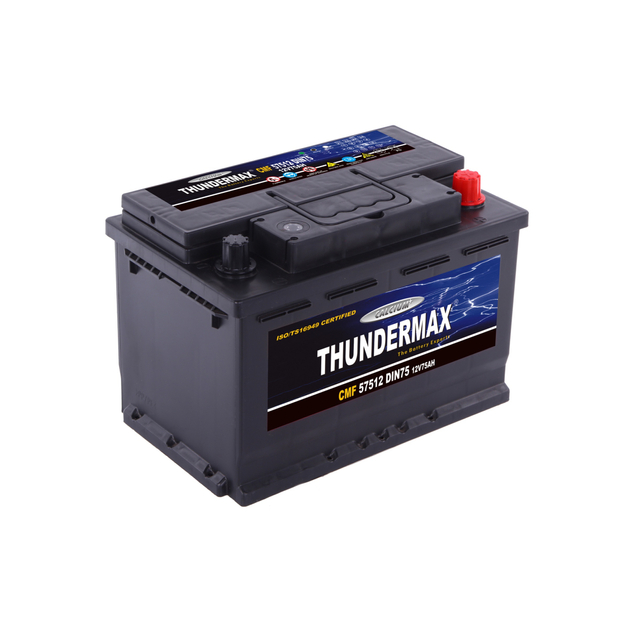
Provide separate quantities for engineering samples, vehicle-fitment testing, pilot production, the initial commercial order, and the annual forecast. These stages involve different setup costs and manufacturing risks, so one combined quantity can produce misleading pricing.
Demand should be listed by SKU. A forecast of 10,000 batteries spread across ten models, two polarities, and several carton languages is commercially different from 10,000 identical units. Record every capacity, case size, polarity, label version, case color, and packaging configuration.
Include expected ordering frequency, seasonal peaks, forecast flexibility, and planned growth. A supplier may be able to support a large annual quantity but still require advance planning for a concentrated seasonal shipment.
Request quantity-based price breaks at clearly defined volumes. This gives the buyer a practical view of how costs may change from pilot production to stable mass supply without relying on an undefined request for the “best price.”
Sample approval criteria should be written before the first prototype is produced. At minimum, confirm dimensions, tolerance, terminal arrangement, polarity, capacity, starting performance, leakage control, sealing, charge behavior, vibration performance, labels, and carton accuracy.
Assign responsibility for each test and name the applicable procedure. The RFQ should state how many samples will be evaluated, what constitutes a failure, whether retesting is allowed, and who pays for revisions caused by incomplete buyer information or supplier nonconformance.
Before mass production, both parties should approve the specification, drawings, artwork, packaging, and reference sample. Production requirements may include batch traceability, date coding, inspection records, pre-shipment samples, photographs, or third-party inspection.
Warranty language needs operational detail. Define its duration, exclusions, required claim evidence, failure-analysis process, replacement method, and the responsibilities of the buyer and supplier. A simple promise of a “two-year warranty” does not explain how field failures will be investigated or resolved.
Finally, include a change-control rule. Approved materials, dimensions, internal construction, labels, packaging, and manufacturing processes should not be altered without documented review. This protects product consistency and prevents later shipments from drifting away from the validated OEM car battery specification.
A reliable quotation begins with more than voltage, capacity, and order volume. Buyers should define the vehicle application, installation dimensions, performance targets, operating conditions, customization scope, testing needs, and commercial terms before comparing prices. This preparation reduces assumptions, shortens revisions, and makes supplier offers easier to evaluate.
For projects involving JUJIANG POWER GROUP Co., Ltd.., the same RFQ package can be used to discuss suitable OEM car battery products, private-label requirements, packaging, samples, and production expectations. Clear inputs help both sides confirm feasibility earlier and move from quotation to approval with fewer avoidable changes.
A: Provide the vehicle model, target market, battery dimensions, terminal layout, voltage, capacity, CCA, reserve capacity, operating conditions, customization details, order quantity, and delivery requirements.
A: Batteries with the same voltage and capacity may differ in case size, terminal position, starting performance, reserve capacity, construction, and compatibility with the vehicle’s charging system.
A: Yes. Private-label projects may include logos, model numbers, labels, cartons, and pallet marks. Buyers should supply editable artwork, approved wording, colors, dimensions, and language versions.
A: Pricing depends on battery specifications, technical modifications, tooling, testing, packaging, order quantity, SKU variety, inspection requirements, shipping terms, and whether the project uses an existing design.
A: Confirm that every quotation covers the same specifications, testing, samples, tooling, packaging, documentation, warranty, Incoterm, lead time, and production quantity before comparing unit prices.

