
Views: 0 Author: Site Editor Publish Time: 2026-06-29 Origin: Site
A sealed battery sounds like a simple answer to acid leaks, but the label can create more confidence than the design alone can justify. A sealed lead acid car battery limits electrolyte movement and is far less likely to spill during normal driving, yet excessive charging, heat, vibration, poor mounting, or case damage can still lead to venting or leakage.
Understanding where that protection comes from—and what can compromise it—helps drivers choose the right battery, install it correctly, recognize warning signs early, and decide when cleaning, inspection, or replacement is the safest response.
The first protective layer is the way electrolyte is held around the lead plates. Depending on the design, sulfuric-acid electrolyte may be absorbed into a porous separator or immobilized in a gel-like medium instead of remaining as freely moving liquid. Reduced movement means less acid can surge toward the lid or vent area when a vehicle corners, stops suddenly, or travels over rough roads.
This structure helps a sealed lead acid car battery tolerate normal vibration and moderate tilting. It does not make the case unbreakable or permit every possible mounting position. The case, seals, valve, and installation still have to remain sound.
Charging creates gases through electrochemical side reactions. In a valve-regulated design, much of the oxygen produced during normal charging is recombined internally rather than vented continuously. A one-way safety valve can release excess gas if pressure rises beyond the intended range.
The valve is a safeguard, not an ordinary breathing vent. Valve-regulated lead-acid batteries are considered sealed because they retain and recombine gases during normal use, even though a pressure-relief device may open under abnormal conditions. Lid bonds, post seals, separators, and the molded case add further barriers against electrolyte escape.
“Sealed,” “spill-resistant,” and “maintenance-free” are useful descriptions, but they are not automatically equivalent to a documented nonspillable classification. Nonspillable batteries must meet defined performance criteria involving vibration, pressure differences, electrolyte movement, short-circuit protection, and secure handling. Some evaluations also consider whether electrolyte can flow from a damaged case under specified conditions.
Check the technical sheet, safety data, installation instructions, and battery label instead of relying on the product name alone. When documentation is unclear, treat the battery as spill-resistant during normal service rather than impossible to leak. Reliable protection depends on both suitable internal construction and correct operation.

Overcharging is one of the clearest ways to defeat normal pressure control. An alternator regulator, converter, solar controller, or external charger that supplies unsuitable voltage can generate gases faster than the battery can recombine them. Pressure rises, the valve may open, and gas or fine electrolyte mist can escape. Prolonged overcharging may also cause heat, electrolyte loss, internal corrosion, case distortion, or seal damage.
High ambient temperature makes the problem harder to manage because chemical reactions proceed faster and charging requirements may change. Engine-compartment heat, poor airflow, or a nearby heat source can combine with excessive charging voltage and reduce the margin before venting occurs. A sealed lead acid car battery should therefore be charged within the limits specified for its actual internal technology, not merely its nominal voltage.
Cold creates a different risk. As a lead-acid battery becomes deeply discharged, its electrolyte contains proportionally more water, increasing the chance of freezing and expansion damage. A deeply discharged battery exposed to severe cold may develop internal damage or cracks that are not immediately obvious.
Mechanical stress can bypass every internal spill-control feature. A loose battery may strike the tray repeatedly, while an unsuitable hold-down can let the case rub against a bolt or sharp edge. Cable tension can also pull sideways on terminal posts and weaken their seals.
Frequent causes include a battery that rocks or bounces in its tray, cables that transfer engine movement to the posts, and a hold-down tightened hard enough to distort the casing. Dropping, puncturing, or placing tools on the battery can also damage the housing. During a collision, road debris or surrounding components may crack the case, while a metal object bridging the terminals can generate enough heat to damage plastic and seals.
“Sealed” never means impact-proof. A battery can release hazardous material after severe damage or internal failure even when leakage is unlikely during normal use. Once the casing, lid seam, or post seal loses integrity, replacement is safer than an improvised repair.
Spill resistance cannot compensate for choosing the wrong battery. A starting battery delivers a short, high-current burst for engine cranking, whereas a deep-cycle unit supplies power over longer periods and tolerates repeated discharge-and-recharge operation. Using either outside its intended duty can create unsuitable charge patterns, excessive cycling, and early failure.
Before installing a sealed lead acid car battery, confirm voltage, dimensions, terminal position, polarity, cranking rating, capacity, and charging compatibility. RV owners must also separate the engine-starting circuit from the house-power system. An amp-hour figure alone does not prove that a battery can provide the required starting current or withstand frequent cycling.
A correctly sized tray and hold-down secure the case without crushing it. The battery base should sit evenly on a clean support, and the cables should connect without pulling on the posts. Any movement that repeatedly loads the casing or terminals can undermine long-term spill protection.
After positioning the battery, check that:
● The case cannot rock, slide, or touch sharp hardware.
● The hold-down is firm without distorting the lid or sidewalls.
● Cables avoid tension, chafing, and hot components.
● Terminal covers prevent accidental short circuits.
● The approved mounting orientation and ventilation instructions are followed.
Even a nonspillable battery needs protection against movement, impact, and short circuits. The same principle applies during transport and vehicle use: containment works best when the installation prevents electrical faults, physical damage, and stress around the post seals. Secure mounting protects both the battery and nearby components.
Battery replacement should include a charging-system check, particularly when the old unit became hot, swelled, leaked, or failed early. Verify that the alternator, converter, solar controller, or external charger supports the exact battery technology. A generic “12-volt” setting may not provide the correct absorption voltage, float voltage, charging current, or temperature compensation.
Keep designed airflow paths open even with a sealed lead acid car battery. Normal valve-regulated operation minimizes gas release, but abnormal charging can still force the valve to vent. Safe installation combines secure mounting, protected terminals, compatible charging, and unobstructed ventilation.
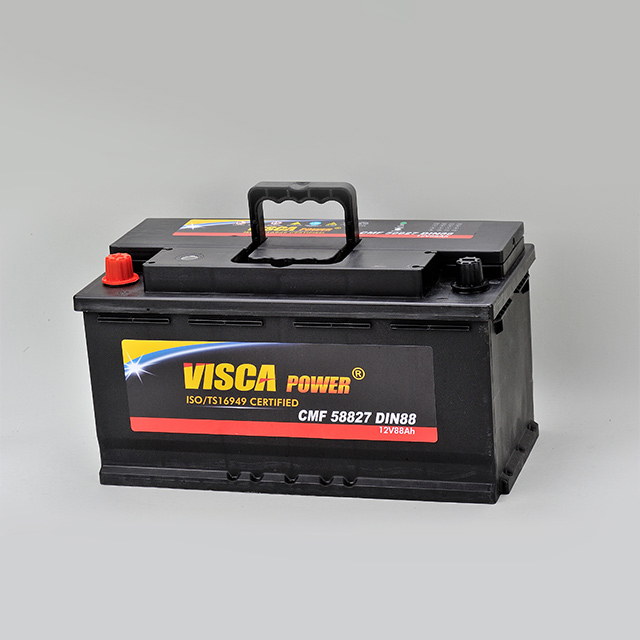
Not every deposit around a battery proves that the case has released a large amount of acid. Light, dry terminal corrosion may result from moisture, a poor connection, small amounts of vapor, or residue from earlier service. Corrosion that returns quickly deserves investigation because it may indicate a weak seal, excessive charging voltage, or a connection generating heat.
More serious signs include recurring wetness near a post or lid seam, cracks, bulging sidewalls, impact marks, unusual warmth, hissing, persistent sharp odor, mist, smoke, or liquid below the battery. These conditions can indicate significant case damage, internal pressure, overheating, or electrolyte release. A hot, swollen, smoking, or actively leaking sealed lead acid car battery should not be charged, opened, drilled, glued, refilled, or resealed.
Battery electrolyte contains sulfuric acid, a corrosive substance that can severely damage the skin, eyes, teeth, and lungs. Avoid direct contact and mist inhalation, and use suitable eye and hand protection near a suspect battery. Keep flames, sparks, cigarettes, jewelry, and loose metal tools away because even a weak battery can deliver dangerous short-circuit current.
Choose the next action from the battery’s physical condition, not from whether the engine still starts. A battery can retain enough capacity to operate while its case or terminal seal is deteriorating. Visible condition, temperature, odor, and charging behavior provide more useful safety clues.
Minor external corrosion may be manageable after safe disconnection, but a compromised case is not a repair project. Significant electrolyte release calls for trained spill response rather than household improvisation. Workplace battery areas may also require suitable protective equipment and dedicated facilities for flushing and neutralizing spilled electrolyte.
Return a damaged or spent lead-acid battery to an authorized retailer, service facility, recycler, or household hazardous-waste program. Never place an automotive lead-acid battery in household trash or a standard municipal recycling bin. Proper collection prevents lead and corrosive electrolyte from entering ordinary waste streams.
“Maintenance-free” normally means the owner does not add water during service. It does not eliminate inspections of the case, terminals, hold-down, cables, state of charge, or charging voltage. A maintenance-free sealed lead acid car battery must still match both the electrical load and the charging source.
Use a focused selection checklist:
● Confirm starting duty, deep-cycle duty, or a specified dual-purpose role.
● Match voltage, capacity, cranking requirement, dimensions, polarity, and terminal layout.
● Verify the technology and approved charging profile.
● Read mounting, ventilation, and nonspillable documentation.
● Inspect the case, seams, posts, and vent area.
● Check warranty terms, technical data, and safety information.
Avoid choosing only by external size or a familiar voltage label. Batteries that fit the same tray can differ in current delivery, cycling behavior, and charging needs. Specifications should support the intended application instead of leaving the installer to infer performance from the word “sealed.”
The two JEJE battery options illustrate why the application should be identified before comparing capacity or case size. The JEJE 75Ah Sealed Maintenance-Free Compact Vehicle SLA Battery is suited to vehicle-focused evaluation, including cranking requirements, tray fit, terminal arrangement, polarity, and charging compatibility. Capacity matters, but it does not replace starting-current and physical-fit specifications.
The JEJE Deep-Cycle Maintenance-Free Battery for RV Systems is intended for auxiliary-power use, where repeated cycling, usable capacity, secure travel mounting, and compatibility with an RV converter, alternator circuit, or solar controller become central concerns. The two products are not interchangeable simply because both reduce routine maintenance and restrict electrolyte movement.
Define the electrical job first, verify the ratings second, and confirm spill-protection documentation third. When those points align, a sealed lead acid car battery can provide dependable service without relying on broad marketing language. That sequence also reduces the risk of buying a battery that fits physically but performs poorly in its intended role.
A sealed lead acid car battery can greatly reduce everyday spill risk, but dependable protection still relies on correct selection, secure mounting, compatible charging, and an undamaged case. Recognizing warning signs such as swelling, recurring moisture, excess heat, or hissing helps drivers act before a minor problem becomes a safety hazard. JUJIANG POWER GROUP Co., Ltd. offers sealed and maintenance-free battery options for vehicle starting and deep-cycle applications, helping users match capacity, installation requirements, and operating demands more accurately. Proper fit and routine inspection remain essential throughout the battery’s service life.
A: Yes. Leakage is uncommon during normal use, but a cracked case, damaged terminal seal, overcharging, excessive heat, freezing, or severe vibration can release electrolyte or acid mist.
A: Not completely. Sealed batteries restrict electrolyte movement and control internal pressure, while “nonspillable” refers to batteries meeting defined leakage, vibration, pressure, and free-liquid requirements.
A: Some VRLA or AGM batteries permit side mounting, but approved orientation varies by design. Continuous upside-down installation is generally avoided, so always follow the manufacturer’s mounting instructions.
A: Yes. Normal gas release is limited, but abnormal charging can open the pressure-relief valve. Keep the battery compartment ventilated and never charge it inside an airtight enclosure.
A: Stop charging or using it, avoid contact with the liquid, and keep sparks and flames away. A cracked, hot, swollen, hissing, or leaking battery requires professional replacement.
A: No. It means routine water refilling is unnecessary. Owners should still inspect the case, terminals, hold-down, cables, corrosion, charging voltage, and unusual changes in battery temperature.

