
Views: 0 Author: Site Editor Publish Time: 2026-06-22 Origin: Site
A battery that works reliably on paved roads may fail much sooner when a light truck spends its days crossing gravel routes, construction sites, farm tracks, or broken streets. Constant vibration can stress internal components, while a loose tray or poorly supported cable may make the damage worse.
Choosing a vibration resistant car battery is not simply a matter of buying the largest or most expensive option. The right choice depends on secure fitment, starting power, electrical workload, internal construction, and verified durability. Understanding these factors helps prevent repeat failures and costly downtime.
Not every light truck needs a specialized vibration resistant car battery. A pickup used mainly for commuting on maintained roads faces a different mechanical environment from a utility truck that crosses rutted sites for eight hours each day. Construction, agriculture, forestry, landscaping, towing, and rural delivery work typically expose the battery to more frequent shocks, especially when the vehicle carries permanently mounted tools or operates with a stiff suspension.
Road condition is only part of the equation. Battery location, vehicle speed, suspension wear, tire pressure, operating hours, and the design of the tray all affect how much movement reaches the battery. A loose clamp can amplify relatively mild road vibration because the case repeatedly strikes the tray instead of moving with the vehicle as a secured assembly.
Unsupported cables create another source of mechanical loading. When a heavy cable swings or pulls as the chassis moves, the terminal post absorbs that force thousands of times during a working day. The battery may appear secure while its posts and internal connections are still experiencing damaging stress.
Vibration damage is often suspected after the same truck experiences repeated premature failures. Before purchasing a replacement, inspect the installation for practical warning signs:
● The battery slides, lifts, or rotates when moderate hand pressure is applied.
● Hold-down hardware is missing, bent, corroded, or fitted with improvised spacers.
● The case is cracked, rubbed, swollen, or marked where it has contacted the tray.
● Terminal posts or cable lugs are loose, distorted, or intermittently losing connection.
● Battery test results are declining even though the open-circuit voltage still appears acceptable.
These symptoms do not prove that vibration is the only cause. Excessive underhood heat, chronic undercharging, parasitic drain, corroded cables, an aging starter, or a weak alternator can produce similar starting complaints. A more expensive vibration-resistant battery will not correct an electrical-system fault, so the tray, cables, charging voltage, and current draw should be checked before another battery is installed.

The most useful vibration protection is hidden inside the case. Lead-acid batteries contain plates coated with active material, and repeated flexing can gradually weaken that material or stress the connections joining the plate groups. A durable vibration resistant car battery limits this movement through tightly packed components, reinforced separators, anchored plate assemblies, and internal supports that reduce empty space around critical parts.
Firm compression matters because the plates should not behave like loosely stacked panels inside a box. When the internal assembly is properly supported, less movement reaches the active material and connecting straps during abrupt impacts. Stronger plate grids may also resist deformation better, although plate thickness alone does not demonstrate complete battery durability.
Shock-absorbing padding or bonding material can add support around the plate group. Such features are particularly relevant to trucks that spend long periods on corrugated roads, quarry tracks, or uneven worksites. Buyers should look for specific construction information rather than accepting “rugged” as sufficient evidence.
Internal reinforcement provides little value if the outer structure cannot maintain alignment. A rigid casing helps keep the plates compressed, protects the battery from tray impacts, and reduces distortion around the lid and terminal posts. Strong terminal connections are equally important because cable movement can concentrate stress at the point where the post enters the case.
Seals must tolerate temperature changes and continual movement without allowing electrolyte to escape. Corrosion-resistant terminal hardware helps preserve a low-resistance connection, but it still requires correct cable support and tightening. Dust protection can also matter for agricultural and construction vehicles, where debris collects around the tray and connection points.
JEJE’s 12V 200Ah sealed heavy-duty battery provides a relevant construction example with its thickened ABS casing, heat-resistant seals, shock-absorbing internal padding, and vibration-resistant plate structure. It is intended for larger commercial, agricultural, and auxiliary-power applications, so these features should not be taken as proof that the model fits every light truck.
Physical compatibility should be checked before capacity or chemistry. Battery group size accounts for voltage, maximum dimensions, terminal arrangement, and special fitment features. Suitable replacement data should also cover hold-down layouts, polarity, terminal configuration, and dimensions for the relevant light-truck application.
Start with the vehicle manufacturer’s specification or an established fitment reference. Confirm the battery’s length, width, height, terminal orientation, polarity, base ledge, and hold-down style. Clearance above the terminals matters because contact with a metal hood or cover can create a serious electrical hazard.
A larger battery is not an upgrade when it requires wooden blocks, makeshift straps, stretched cables, or altered terminals. Those changes can increase movement and create new failure points. The most effective vibration resistant car battery is one that fits its intended mounting system without improvisation.
Cold cranking amps, reserve capacity, amp-hours, and cycle capability answer different questions. CCA indicates the battery’s ability to deliver starting current in cold conditions. The replacement should meet the vehicle manufacturer’s minimum requirement before accessory demands are considered.
Reserve capacity indicates how long the battery can support specified loads when alternator output is unavailable. Amp-hour capacity describes stored energy over a defined discharge rate, making it useful when comparing batteries for longer-duration equipment use. Neither figure automatically proves that a battery can deliver the high current required to crank a particular engine.
Cycle capability becomes important when a truck repeatedly powers equipment and is then recharged. Liftgates, cargo lights, pumps, winches, refrigeration units, communication systems, and inverters can consume substantial energy while the engine is idling or switched off. In these applications, a starting battery with a high CCA rating may still be the wrong tool for repeated deep discharge.
More amp-hours do not necessarily mean better starting performance. Additional capacity can increase weight, size, recharge time, and cost without addressing the truck’s main requirement. Buyers should first define whether they need reliable cranking, extended accessory runtime, repeated cycling, or a combination supported by separate batteries.
“Vibration resistant” is meaningful only when the claim is connected to construction details or a repeatable test. Ask the supplier which procedure was used, how long the test lasted, which frequency range and acceleration levels were applied, and whether the battery was tested in more than one axis. Useful post-test results may include retained capacity, starting output, electrolyte leakage, case condition, and terminal integrity.
SAE J3060 is an established guide for vibration-testing procedures covering automotive and heavy-duty storage batteries. Its scope includes light trucks, lead-acid batteries, performance testing, starting, and test procedures. A supplier does not need to disclose proprietary manufacturing details, but it should be able to identify the basis for a model-specific durability claim.
Quality-management certification addresses manufacturing processes rather than one product’s vibration performance. Separate recommended methods and specifications apply to starting batteries, heavy-duty applications, AGM separators, non-spillable VRLA batteries, and related materials. A general certificate should not be treated as a substitute for relevant product testing.
Warranty language also deserves scrutiny. Check whether commercial use, off-road operation, auxiliary loads, improper charging, and installation damage are covered or excluded. A long warranty is less useful when the operating conditions that matter to the truck are outside its terms.
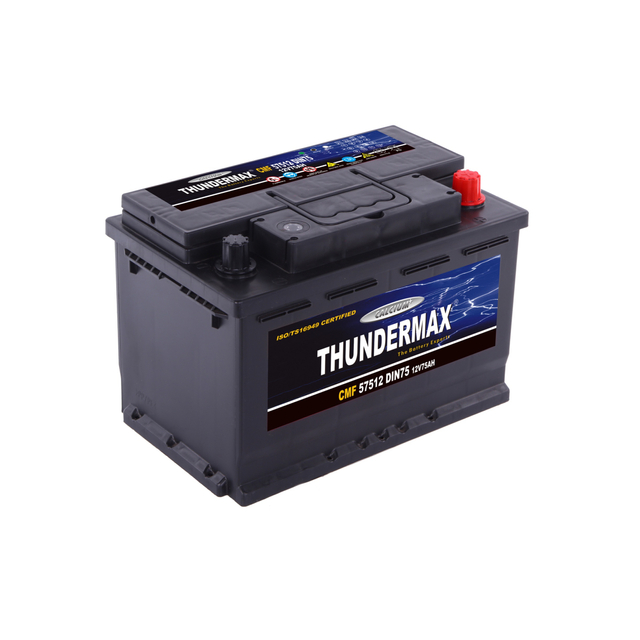
Battery selection becomes clearer when it begins with the truck’s daily work rather than a preferred chemistry. A road-driven pickup primarily needs correct fit, adequate starting power, and a reliable hold-down. Construction and farm vehicles place more emphasis on reinforced internal construction, case rigidity, and documented resistance to continuous shock.
Delivery trucks create a different challenge. Frequent engine starts consume energy, while short trips may provide limited time for the alternator to restore the charge. Towing and service vehicles can add trailer controls, lighting, communication equipment, pumps, or powered tools, shifting attention toward reserve capacity and cycling performance.
Vehicles equipped with factory start-stop systems should retain the specified battery technology and electrical rating. Substituting a conventional design merely because it fits the tray may lead to inadequate charge acceptance or premature cycling failure. Vibration resistance, starting output, and deep-cycle durability should therefore be assessed as separate performance needs.
Light-Truck Use | Main Battery Priority | Additional Check |
Daily paved-road driving | Correct fit and starting output | Tray and hold-down condition |
Construction or farm routes | Reinforced vibration-resistant design | Case and terminal durability |
Frequent delivery stops | Starting power and cycle stability | Available recharge time |
Liftgate, winch, or work equipment | Reserve capacity | Alternator and cable capacity |
Camping or off-grid operation | Dedicated auxiliary battery | Correct charging profile |
A vibration resistant car battery cannot protect itself from a damaged mounting system. Clean the tray before installation and remove rust, stones, dried electrolyte, or raised debris that could create pressure points under the case. Bent brackets and corroded clamps should be replaced instead of reshaped repeatedly or supplemented with temporary straps.
Tighten the hold-down evenly so the battery cannot slide, rotate, or lift, but avoid crushing or distorting the casing. Cable routing should allow normal engine and chassis movement without pulling on the terminal posts. Heavy leads may need independent support so their weight is not carried by the battery connection.
After installation, check terminal clearance and protect the positive post from nearby metal. Trucks that return immediately to rough-road service should have the hold-down and cable connections rechecked after an initial operating period. Small amounts of settling can loosen hardware even when the first installation appeared secure.
Inspection intervals should reflect operating severity. A truck used occasionally on paved roads does not need the same attention as a vehicle that travels across a construction site every day. Rough-duty maintenance should include examination of the case, tray, clamp, terminal posts, cable lugs, and cable supports.
Electrical checks are also necessary because mechanical damage and charging problems can occur together. Resting voltage, charging-system output, and starting performance provide more useful information when recorded over time rather than judged from one isolated reading. Conductance or load testing can help identify declining capability before a no-start event interrupts work.
“Maintenance-free” generally means that routine water topping is not required. It does not eliminate inspections of the mounting system, cables, charge condition, or alternator. Keeping the battery fully secured and correctly charged often contributes as much to service life as choosing a premium vibration-resistant design.
A reliable light-truck battery must do more than meet a basic voltage or capacity requirement. Secure fitment, adequate starting power, suitable reserve capacity, reinforced construction, and proper charging all influence how well it survives rough roads. Choosing a vibration resistant car battery around the truck’s real workload helps reduce repeat failures and unplanned downtime.
JUJIANG provides battery options for different starting and auxiliary power needs. Comparing each model’s dimensions, construction, electrical ratings, and intended application can help truck owners and fleet operators make a practical, better-matched decision.
A: It typically uses firmly supported plates, reinforced separators, durable internal connections, and a rigid casing to limit component movement and active-material damage on rough roads.
A: Repeated shaking can loosen connections, weaken plate material, damage terminals, and increase internal resistance. A loose battery hold-down can significantly accelerate this deterioration.
A: It can be suitable when its group size, terminal layout, CCA, reserve capacity, and battery type match the vehicle manufacturer’s specifications and operating demands.
A: Check the correct physical size, terminal orientation, cold cranking amps, reserve capacity, cycle capability, and documented vibration resistance before comparing price or total amp-hour capacity.
A: Yes. A properly fitted hold-down prevents the battery from striking the tray, while supported cables reduce repeated stress on terminal posts and internal connections.

