
Views: 0 Author: Site Editor Publish Time: 2026-09-03 Origin: Site
Unmanaged inventory time acts as a hidden liability in any warehousing operation. A battery’s lifespan begins the moment electrolyte is introduced at the factory, not the moment it is installed in a vehicle. Prolonged warehousing without intervention leads directly to natural self-discharge, irreversible sulfation, and a high rate of DOA (dead on arrival) products. This results in increased warranty claims, dissatisfied end-users, and heavily compromised operational margins for distributors and fleet managers.
Mitigating these risks requires a highly technical understanding of degradation chemistry. You must implement strict environmental and physical controls across your facility. Furthermore, establishing a strategic framework for evaluating both internal warehouse protocols and the supply chain practices of your chosen automotive battery supplier is a mandatory step. Proper starter battery storage demands active management to ensure product viability upon delivery.
Baseline Degradation: All lead-acid batteries naturally self-discharge at a rate of 1% to 15% per month, heavily dependent on ambient storage temperatures and internal chemistry.
Permanent Capacity Loss: Allowing a 12V starting battery to drop below 12.4V during storage initiates lead sulfate crystallization, permanently reducing cranking amps and overall lifespan.
Inventory Rotation is Critical: Implementing strict FIFO (First-In, First-Out) protocols, pre-dispatch testing, and scheduled maintenance charging are non-negotiable requirements for preserving car battery shelf life.
Supplier Accountability: A reliable car battery manufacturer must provide transparent date coding and demonstrate climate-controlled logistics to ensure you are not receiving pre-degraded stock.
Establishing the baseline chemical realities dictates exactly how long a unit can sit before active intervention is required. Success in inventory management is defined by maintaining open-circuit voltage (OCV) above critical sulfation thresholds. When you understand the internal reactions, you can accurately predict degradation timelines and schedule appropriate maintenance. We see too many warehouses treat batteries like inert metal parts. They are active chemical systems that degrade every single day they sit on a shelf.
Internal chemical reactions cause parasitic drain even when the unit remains completely disconnected from any electrical load. The active materials on the internal plates continuously react with the sulfuric acid electrolyte. This continuous, unavoidable reaction slowly depletes the stored electrical charge. Baseline discharge rates vary significantly across different grid alloys used in manufacturing. Standard antimony grids, often found in older flooded designs, discharge much faster than modern calcium-calcium grid configurations.
A typical 12V starting battery loses capacity in a relatively linear fashion over time when kept at a stable temperature. The mathematical relationship between time in storage and voltage drop is predictable and measurable. A fully charged, healthy unit sits at roughly 12.7V to 12.8V. It will drop by several millivolts each week depending on the ambient conditions of the warehouse. Monitoring this specific gravity and voltage drop forms the foundation of any effective storage protocol. If you track a pallet of standard flooded units over a six-month period in a non-climate-controlled warehouse, you will observe a steady decline that eventually crosses the threshold into permanent damage.
Sulfation occurs when amorphous lead sulfate transitions into a hardened, crystalline lead sulfate state. During normal discharge, the initial amorphous state forms on the plates. This soft sulfate remains completely reversible during a standard charging cycle. However, allowing the voltage to drop below the critical threshold of 12.4V accelerates hard sulfation. These dense crystals permanently adhere to and block the active plate area.
This crystallization permanently reduces Cold Cranking Amps (CCA) and overall reserve capacity. The internal resistance spikes, making the unit sluggish to accept a charge and weak under load. Extreme long-term neglect destroys the internal chemical structure entirely. Leaving units for one to two years without maintenance renders them completely useless. Irreversible crystallization makes the unit a total financial loss. Heavily sulfated units become potentially unsafe to recharge, as the high internal resistance generates excessive heat during charging attempts. We have seen entire pallets scrapped because warehouse managers failed to implement a basic 90-day charging rotation.
Assessing how warehouse conditions and physical handling directly translate to product viability is a daily operational requirement. Poor environmental controls accelerate chemical breakdown, while improper physical handling causes immediate structural damage. Both lead directly to financial loss.
The Arrhenius equation applies directly to battery storage chemistry. Chemical reaction rates roughly double for every 10°C (18°F) increase above the optimal room temperature of 25°C (77°F). High heat drastically accelerates natural self-discharge, turning a six-month shelf life into a two-month liability. Warehouses lacking proper climate control during summer months will see inventory degrade at an alarming pace. A unit stored at 35°C (95°F) will self-discharge twice as fast as one stored at 25°C.
Conversely, cold climates present an entirely different hazard. Deeply discharged units contain a higher concentration of water and a lower concentration of acid in their electrolyte mix. This significantly lowers the freezing point of the liquid inside. Freezing causes the electrolyte to expand rapidly, which can easily crack the internal plastic casing or warp the lead plates. A cracked casing destroys the unit before it ever leaves the facility, creating hazardous acid spills in the storage racks. Managing car battery shelf life requires keeping warehouse temperatures as stable as possible year-round.
High ambient humidity interacts poorly with microscopic acid vapor venting. Even highly engineered sealed units can vent trace amounts of gas under certain atmospheric conditions or temperature swings. Ambient moisture combines with these acidic vapors to cause premature terminal oxidation. This white, powdery buildup on the lead posts degrades the electrical connection.
Oxidized terminals severely impact initial load testing results. They create false negative readings during pre-dispatch readiness checks, forcing workers to waste time cleaning terminals or unnecessarily scrapping good units. Visible corrosion severely damages customer perception upon delivery. Managing warehouse humidity through proper HVAC systems or industrial dehumidifiers prevents this unnecessary surface degradation. We recommend keeping relative humidity below 50% in battery storage zones.
Warehouse safety protocols must strictly dictate maximum stacking heights to prevent physical damage. Excessive weight from stacking pallets too high creates severe casing stress on the bottom layers. This pressure leads to micro-cracking and eventual structural failure. Structural failure inevitably leads to dangerous acid leaks, which can damage surrounding inventory and warehouse infrastructure.
Improper palletizing creates localized pressure points. Implementing safe storage guidelines is mandatory for any facility handling heavy lead-acid products.
Never stack standard automotive battery pallets more than three tiers high.
Always utilize thick, structural cardboard dividers or wooden slip sheets between layers.
Ensure automated shrink wrap tension does not crush the corner units on the pallet.
Store heavy pallets on floor-level racking away from high-speed forklift traffic zones.
Inspect wooden pallets for protruding nails or broken slats before loading units.
Maintain a minimum clearance of 18 inches between the top pallet and warehouse sprinkler heads.
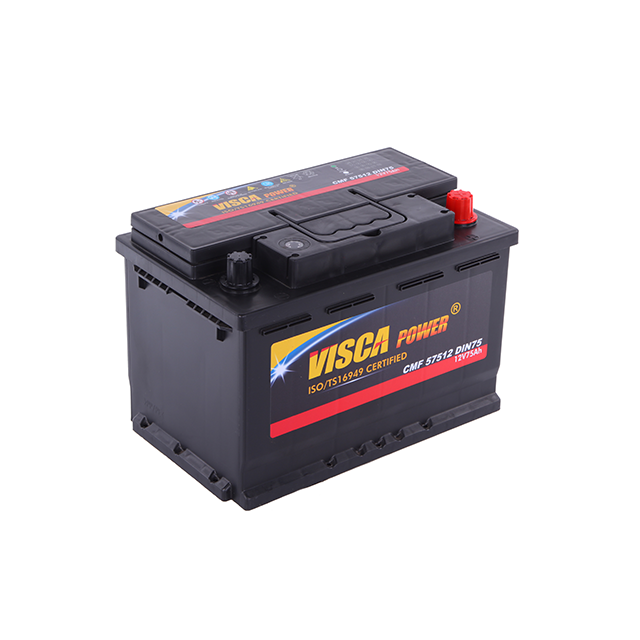
Categorizing inventory based on internal chemistry determines appropriate storage durations and maintenance schedules. Different designs require distinct handling procedures to maintain their viability over long periods. You cannot treat a flooded unit the same way you treat an AGM unit.
Standard flooded batteries require strict upright storage and active ventilation due to their vented caps. They typically utilize antimony alloys in their grid construction, which inherently increases self-discharge rates. These units demand frequent monitoring and regular top-off charging to prevent rapid sulfation. If you stock flooded units, you need a dedicated charging station and a strict 30-day rotation schedule.
Modern calcium-calcium designs offer vastly superior storage tolerances. A maintenance free starter battery holds its charge significantly longer due to the reduced gassing and lower internal parasitic drain. You still need to monitor the OCV, but the inspection intervals stretch out considerably. While flooded units might require charging every 30 to 45 days, calcium-calcium units often survive 90 days in a climate-controlled environment before needing a top-off charge. This reduces warehouse labor costs and lowers the risk of neglected inventory.
Absorbent Glass Mat (AGM) and Gel designs provide exceptional shelf life characteristics. They utilize higher purity lead and internal recombinant technology. This specific internal chemistry recombines oxygen and hydrogen back into water during the chemical process. It drastically slows the self-discharge rate and eliminates acid stratification issues common in flooded types.
A sealed automotive battery can often sit for up to six months without requiring a top-off charge, provided the warehouse temperature remains near 25°C. The glass mats hold the electrolyte in suspension, meaning these units are highly resistant to vibration damage during transit and can withstand minor physical impacts better than flooded counterparts.
Battery Chemistry Type | Average Self-Discharge Rate (Monthly at 25°C) | Recommended OCV Inspection Interval | Maximum Stacking Height (Pallets) |
|---|---|---|---|
Standard Flooded (Antimony Grid) | 5% - 15% | 30 Days | 2 Tiers |
Maintenance-Free (Calcium Grid) | 3% - 5% | 60 - 90 Days | 3 Tiers |
AGM / Gel (Recombinant Sealed) | 1% - 3% | 120 - 150 Days | 3 Tiers |
The primary trade-off involves higher upfront procurement costs for AGM and Gel units. This initial expense heavily offsets the significantly reduced warehouse maintenance overhead. Fewer labor hours spent testing and charging inventory translates directly to a more efficient warehousing operation.
Actionable frameworks prevent inventory loss and ensure product readiness exactly at the point of sale. Relying on memory or ad-hoc checking leads to sulfated inventory and unhappy clients. You need documented procedures that every warehouse worker follows.
Establish a standardized OCV testing schedule immediately upon receiving inventory. Test units every 30 to 90 days depending on the ambient temperature and the specific battery type. Use calibrated digital multimeters to ensure accurate readings. Define strict parameters for maintenance charging to avoid damaging the internal plates.
Charging must follow proper bulk, absorption, and float stages to avoid thermal runaway. Overcharging during storage boils the electrolyte and destroys the grid structure. Compare the operational costs of manual, periodic top-off charging against utilizing continuous smart maintainers. Smart maintainers theoretically extend shelf life to 4-5 years under strict, climate-controlled conditions by automatically applying a micro-charge only when the voltage drops. For large-scale operations, rolling charging carts equipped with multi-bank smart chargers are highly effective.
Logistical implementation of FIFO remains critical in high-volume automotive parts warehousing. Older stock must physically ship before newer arrivals. Use robust warehouse management software (WMS) to track batch aging accurately. Scan barcodes upon arrival to log the exact manufacturing date into the system.
Prioritize older stock for immediate dispatch to high-turnover clients. Physical warehouse layouts should support this rotation. Utilize gravity-fed flow racking systems where possible. Loading new stock from the back and picking from the front naturally forces workers to pick the oldest units first, eliminating human error in inventory rotation. If flow racking is not possible, designate specific floor zones for incoming versus outgoing stock and enforce strict picking paths.
Mandatory testing protocols guarantee performance before shipping. Never ship a unit blindly from long-term inventory without verification. Perform strict load testing and conductance testing on every stored unit prior to palletizing for outbound freight. Conductance testing measures the internal resistance, providing a clear picture of plate health and potential sulfation.
Apply specific recovery charging steps if the OCV falls below 12.5V during the pre-dispatch check. Use a low-amp, slow charge to gently break down mild sulfation without generating excessive heat. This ensures the unit delivers its full rated CCA upon installation. Rigorous pre-dispatch testing prevents DOA claims, reduces reverse logistics costs, and protects your operational reputation.
Shifting focus from internal management to supply chain evaluation is vital for long-term success. The cheapest unit price means absolutely nothing if the manufacturer's poor handling compromises the product before it even reaches your loading dock. You must audit your suppliers just as strictly as you audit your own warehouse.
Learn to decode standard alphanumeric date stamps to verify true product age upon receipt. A stamp reading "C3" typically indicates manufacturing in March of a year ending in 3. Verify this age immediately upon receipt at your facility. Establish acceptable maximum transit and pre-delivery storage times in your vendor agreements.
A reliable car battery manufacturer will provide full supply chain transparency. They should be able to prove how long units sat in their own regional distribution centers. Reject shipments that arrive already six months old without documented proof of maintenance charging during transit or storage. We routinely audit incoming shipments and reject pallets that fail random OCV spot checks at the receiving dock.
Analyze standard warranty clauses regarding shelf life and pre-installation maintenance requirements. Look closely at the fine print. Identify red flags in supplier contracts that attempt to shift the financial burden of natural self-discharge entirely onto the distributor. Ensure the warranty covers internal defects that manifest during standard, well-managed storage windows.
If a supplier refuses to warrant units that have been stored for 90 days despite proof of proper maintenance charging, reconsider the partnership. The warranty should protect against manufacturing defects, not act as a shield for delivering old, pre-sulfated inventory. Negotiate terms that clearly define acceptable voltage drops during transit.
Vet your suppliers rigorously before signing large-volume purchase agreements. Use this checklist during negotiations to assess their logistical competence:
What are your specific climate control standards in regional distribution centers?
Do you perform documented top-off charging before palletizing units for freight?
What are your strict pallet stacking limits during ocean or rail transit?
How do you handle DOA claims for units stored under 90 days in our facility?
Can you provide detailed maintenance logs for long-transit international shipments?
What specific grid alloy technologies do you use to minimize self-discharge?
Do you use automated shrink wrapping to ensure pallet stability without crushing corner units?
Effective starter battery storage requires active environmental control, rigorous testing schedules, safe physical handling, and strict inventory rotation to prevent inevitable chemical degradation. When evaluating inventory strategies, prioritize sealed or maintenance-free chemistries for slower turnover stock. Select suppliers who can definitively prove climate-controlled logistics, safe palletizing, and transparent date coding.
Conduct an immediate OCV audit of all current warehouse stock to identify at-risk units.
Implement a strict 60-day testing and charging cadence for all stored inventory.
Review your current manufacturer's shipping and storage SLAs to ensure alignment with your quality standards.
Reconfigure warehouse racking to physically enforce FIFO rotation.
A: A new unit typically maintains optimal performance for 3 to 6 months at ideal temperatures (25°C). Degradation begins immediately upon manufacturing. High heat accelerates this process, requiring active testing and top-off charging before dispatch to ensure full capacity.
A: Yes. The term "maintenance free" refers exclusively to the lack of need for water addition. These units still experience natural self-discharge. They require periodic top-off charging or connection to a smart maintainer if stored beyond 3 to 4 months.
A: The ideal storage temperature range is between 15°C and 25°C (59°F to 77°F). Storing units in environments hotter than 25°C drastically accelerates self-discharge and sulfation, while extreme cold risks freezing deeply discharged units.
A: Sulfation is indicated by a resting voltage consistently below 12.4V, a failure to accept a charge normally, or significantly reduced Cold Cranking Amps (CCA) during a conductance test. The unit will often get excessively hot during charging attempts.
A: It is highly dangerous to charge a frozen battery. You must allow it to thaw completely at room temperature first. Freezing often cracks the internal casing or warps the plates, usually rendering the unit permanently damaged and unsafe for use.
A: You should never allow a stored 12V unit to drop below 12.4V. Dropping below this critical threshold initiates hard lead sulfate crystallization, which permanently damages the plates and reduces overall lifespan and capacity.

