
Views: 0 Author: Site Editor Publish Time: 2026-11-26 Origin: Site
International battery logistics carries extreme stakes. Inadequate packaging triggers corrosive leaks, thermal events, heavy regulatory fines, and impounded shipments at customs. Commercial buyers and distributors face a strict balancing act. You must maintain hazardous materials compliance while optimizing freight density. Products must arrive in retail-ready condition without compromising safety or violating international transit laws.
Successful international transit requires a systematic approach to packaging engineering. Strict regulatory adherence and rigorous vetting of logistics capabilities form the foundation of secure shipping. Navigating these complexities demands robust structural design, precise documentation, and a clear understanding of chemical hazards. Proper Car Battery Packaging for Shipping mitigates risk, prevents costly delays, and ensures operational continuity across global supply chains.
Regulatory Non-Negotiables: International shipping requires strict adherence to IMDG (ocean) and IATA (air) regulations, with specific UN classifications dictating packaging materials and testing standards.
Terminal Protection is Critical: Over 60% of battery transit incidents stem from inadequate short-circuit protection; rigid terminal caps and structural separation are mandatory.
The Weight Density Dilemma: Batteries "weigh out" before they "cube out." Effective packaging must optimize pallet density without exceeding shipping container Verified Gross Mass (VGM) limits.
OEM Customization vs. Standardization: Effective OEM Car Battery Packaging must harmonize brand presentation with heavy-duty structural integrity, utilizing acid-resistant liners and ISPM-15 compliant pallets.
Supplier Vetting: A reliable Car Battery Export Supplier must provide documented proof of UN packaging performance tests (drop, stack, and vibration) before procurement contracts are signed.
Shipping batteries internationally requires precise hazard classification. Regulators categorize these products based on their internal chemistry and spill potential. UN 2794 applies to traditional wet batteries filled with acid. UN 2800 designates wet, non-spillable batteries. Both classifications fall under the Class 8 Corrosive designation.
The Class 8 designation dictates strict baseline requirements for primary and secondary packaging. Packaging must withstand the corrosive nature of sulfuric acid. Materials cannot degrade if exposed to minor electrolyte leaks. This classification directly influences the choice of inner liners, outer corrugated boxes, and pallet materials used during export. You cannot use standard commercial cardboard for these shipments. The corrugated material must undergo specific chemical resistance testing to ensure it will not disintegrate upon contact with battery acid.
UN Number | Description | Hazard Class | Key Packaging Focus |
|---|---|---|---|
UN 2794 | Batteries, wet, filled with acid | Class 8 (Corrosive) | Upright orientation, leak containment, acid-resistant trays |
UN 2800 | Batteries, wet, non-spillable | Class 8 (Corrosive) | Short-circuit prevention, crush resistance, terminal isolation |
UN 2795 | Batteries, wet, filled with alkali | Class 8 (Corrosive) | Alkali-resistant liners, strict segregation from acid batteries |
Ocean freight relies on the International Maritime Dangerous Goods (IMDG) Code. Packing instruction P801 specifically governs sea freight for batteries. P801 requires shippers to secure batteries against movement. Packaging must prevent leakage under normal transit conditions. Pallets must feature acid-resistant catch trays or equivalent containment measures. When loading a container, the blocking and bracing must account for the pitch and roll of the cargo vessel. Wood dunnage and heavy-duty airbags are standard requirements to prevent pallet shifting.
Air freight follows the International Air Transport Association Dangerous Goods Regulations (IATA DGR). Air transport imposes severe restrictions and specialized UN specification packaging requirements. Strict quantity limits apply per package. Commercial shippers generally avoid air freight due to prohibitive costs. Urgent replacement orders often necessitate air transport, requiring flawless compliance. The packaging must withstand significant pressure differentials encountered at high altitudes without venting hazardous gases into the aircraft hold.
Packaging must pass standardized performance tests to receive UN certification marks. These include high-frequency vibration tests, pressure differential testing, and drop tests from specified heights. Only packaging that survives these protocols without leaking or rupturing earns the legal right to transport Class 8 corrosive goods. A third-party testing laboratory must validate these results before you can print the UN specification mark on your cartons.
Physical packaging represents only half of the compliance equation. Exterior packaging labels must match the provided Safety Data Sheet (SDS) exactly. The Dangerous Goods Declaration (DGD) must reflect the physical markings on the pallets and cartons. Any deviation triggers immediate regulatory scrutiny at the port of departure or arrival.
Discrepancies between physical packaging markings and export documentation remain the leading cause of customs holds. A missing Class 8 diamond or an incorrect UN number on a carton will halt an entire shipping container. Shippers must implement strict quality control checks to align physical labels with digital export paperwork. The commercial invoice, packing list, SDS, and DGD must form a cohesive, error-free document packet.
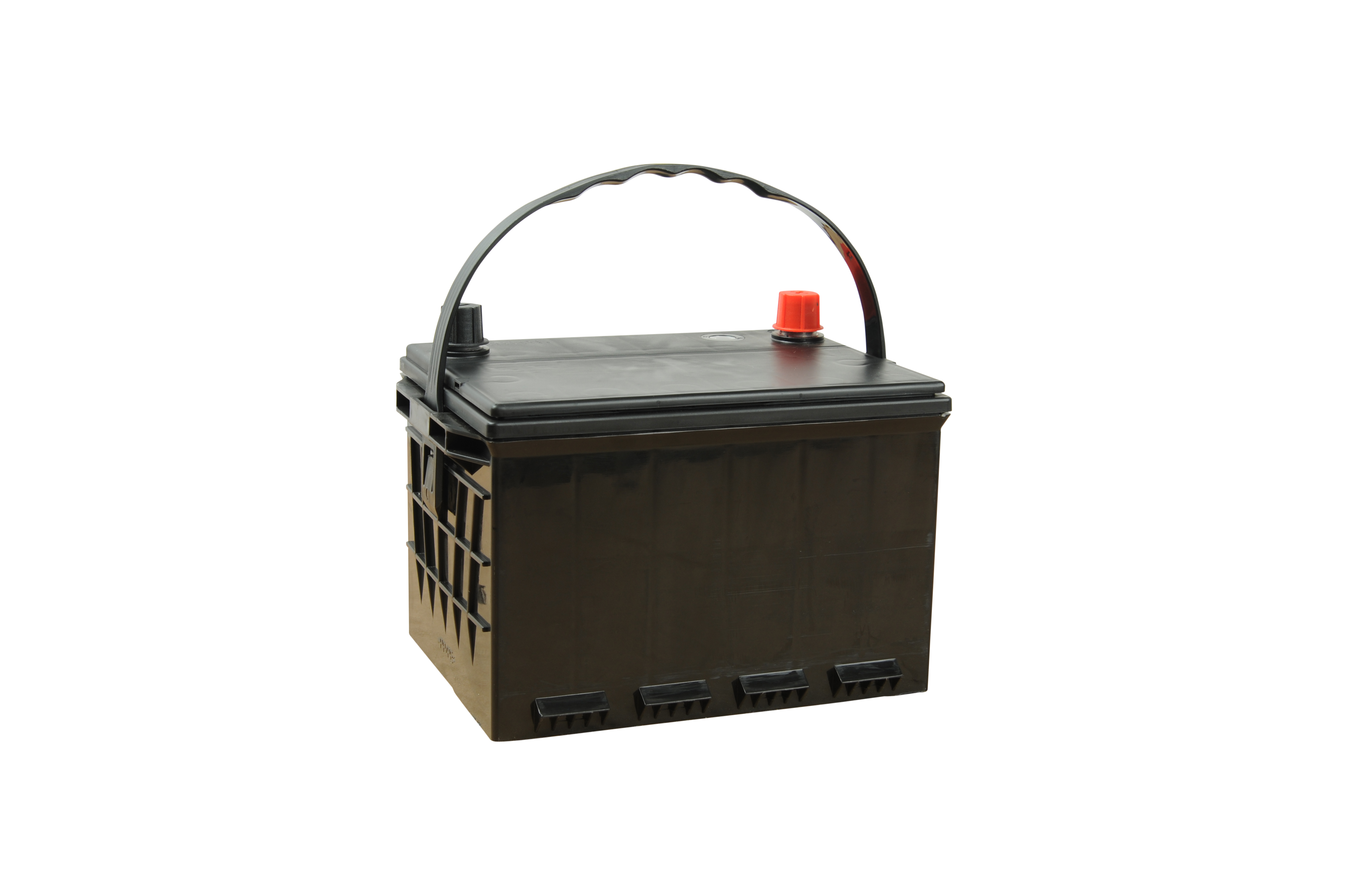
Electrolyte spills compromise pallet integrity and trigger hazmat incidents. Acid-proof inner liners provide the first line of defense. Heavy-duty polyethylene bags, typically 6-mil thickness or greater, encapsulate the battery. This contains potential leaks at the source. This containment prevents acid from degrading the outer corrugated packaging and spreading to adjacent units.
Secondary packaging incorporates absorbent materials to neutralize minor leaks. Specialized absorbent pads sit beneath the batteries within the carton. These pads capture and neutralize sulfuric acid before it reaches the wooden pallet. Preventing acid from pooling ensures the structural stability of the entire palletized load remains intact. If acid soaks into a wooden pallet, the wood weakens, increasing the risk of a catastrophic load collapse during forklift handling.
Terminal isolation prevents catastrophic thermal events. Engineering requirements demand non-conductive terminal caps for every unit. Recessed terminal designs offer additional physical protection against accidental contact. Rigid corrugated separators physically isolate individual batteries within master cartons. You cannot rely on thin cardboard; the separators must be double-wall corrugated to withstand transit friction.
Failure to physically separate batteries introduces severe implementation risks. Transit vibration causes units to shift. Unprotected terminals can rub against conductive materials or adjacent batteries. This friction induces short circuits, rapidly generating heat and igniting surrounding packaging materials. Robust terminal protection eliminates this specific fire risk. Polypropylene terminal covers snapped tightly over the lead posts provide the most reliable defense.
Export-grade pallets form the foundation of safe international transit. Shippers must use ISPM 15 heat-treated wood pallets to clear international customs. Heavy-duty plastic pallets offer an acid-resistant alternative for closed-loop supply chains. The pallet must support extreme dynamic loads without bowing or fracturing. Block pallets are generally preferred over stringer pallets for battery export due to their superior load-bearing capacity and four-way forklift access.
Stacking architecture requires precise engineering. Maximum tier limits prevent lower layers from crushing under vertical pressure. Honeycomb corrugated layer pads distribute weight evenly across tiers. Heavy-duty edge protectors maintain carton geometry. High-tension PET strapping, combined with 120-gauge UV-resistant stretch wrap, locks the load into a single, cohesive unit. The strapping must be tensioned correctly; too loose, and the load shifts. Too tight, and the straps cut into the top tier of batteries.
Lead-acid batteries present a unique logistical reality. A standard 20-foot shipping container will reach its maximum legal weight limit long before running out of physical space. Shippers refer to this as "weighing out" rather than "cubing out." Exceeding the Verified Gross Mass (VGM) limits results in rejected loads at the port terminal. A typical 20-foot container has a payload capacity of roughly 28,000 kilograms. If a single pallet of batteries weighs 1,500 kilograms, you will hit the weight limit at 18 pallets, leaving significant empty space inside the container.
Engineering packaging for weight density requires strategic planning. Packaging must maximize structural integrity under immense vertical loads while minimizing its own tare weight. Optimizing the payload-to-tare-weight ratio ensures maximum product volume per container without violating maritime weight restrictions. Strategic pallet spacing inside the container distributes the heavy load evenly across the chassis. You must use heavy timber blocking to secure the pallets and prevent them from sliding into the empty spaces during transit.
Ocean transit exposes shipping containers to extreme thermal fluctuations. High-temperature zones accelerate gas generation within the batteries. Sealed shipping containers trap this hydrogen gas, creating a volatile environment. Packaging designs must account for this chemical reality. You cannot pack batteries in airtight enclosures.
Packaging must allow for adequate ventilation. Cartons cannot be hermetically sealed. Vented caps on the batteries must remain unobstructed. Simultaneously, the outer packaging must protect the battery casing from severe condensation, commonly known as container rain. Moisture accumulation degrades corrugated board and promotes terminal oxidation. Breathable yet moisture-resistant stretch wrap provides the necessary balance. Hanging high-capacity calcium chloride desiccants inside the shipping container absorbs excess ambient moisture during the voyage.
Wet cell technologies present specific vulnerabilities during transit. Free-flowing electrolyte demands strict upright orientation. A standard Automotive Lead Acid Battery requires prominent orientation arrows on all visible sides of the packaging. Handlers must instantly recognize the correct upright position to prevent acid leakage through the vented caps. Even a slight tilt during loading can cause electrolyte to bypass the vent baffles.
Packaging must feature reinforced bottom trays to handle the high specific gravity of the internal components. High-volume container shipping forces a choice between individual carton packaging and bulk slip-sheet palletization. Individual cartons offer superior retail readiness and individual protection. Bulk slip-sheet configurations maximize pallet density but require specialized handling equipment at the receiving facility. The choice depends entirely on the receiving facility's material handling capabilities.
Feature | Flooded Lead-Acid Packaging | AGM/Gel Packaging |
|---|---|---|
Orientation | Strictly upright; mandatory orientation arrows | Multi-positional; orientation arrows recommended but less critical |
Leak Containment | Heavy-duty acid catch trays and absorbent pads required | Standard containment; qualifies for non-spillable exceptions |
Venting | Open ventilation required to prevent hydrogen buildup | Valve-regulated; minimal ventilation required |
Crush Resistance | Standard double-wall corrugated | High-burst strength corrugated due to heavier lead grid density |
Absorbent Glass Mat (AGM) and Gel technologies alter transit requirements. The electrolyte remains suspended in fiberglass mats or silica gel. This design often qualifies a Maintenance Free Car Battery for "non-spillable" exceptions under Special Provision 238. These exceptions reduce some of the most stringent hazardous material handling requirements, simplifying the export documentation process.
Despite spill-proof designs, robust crush-resistant packaging remains mandatory. AGM batteries contain denser lead grids, making them heavier than standard flooded batteries of the same physical dimensions. Impact damage to the casing will destroy the internal compression of the glass mats, ruining the battery. Packaging must absorb shock and prevent casing fractures during rough port handling. High-density foam inserts or heavy-duty corrugated corner blocks provide the necessary impact absorption.
OEM Car Battery Packaging must serve dual purposes. It functions as a rugged shipping container across oceans and transforms into a retail display unit upon arrival. Designing this dual-purpose packaging requires advanced corrugated engineering. The box must survive high humidity and dynamic transit shocks without losing its aesthetic appeal. Faded graphics or crushed corners render the product unsellable in a retail environment.
Material specifications dictate performance. Engineers utilize 44 ECT (Edge Crush Test) or 51 ECT double-wall corrugated board for maximum stacking strength. Moisture-resistant coatings prevent the cardboard from absorbing ambient humidity inside the shipping container. High-burst-strength ratings ensure the packaging will not rupture if a battery shifts internally during sudden container movements. The die-cut design must allow for easy opening by retail staff without requiring sharp blades that could puncture the battery casing.
Exterior markings must comply with international law while accommodating brand guidelines. Mandatory markings include the Class 8 Corrosive diamond, the specific UN number, the proper shipping name, and orientation arrows. These elements must contrast with the background and remain visible from a distance. Regulators do not care about your brand aesthetics; safety markings take absolute precedence.
Place the Class 8 Corrosive diamond on a contrasting background.
Print the UN number (e.g., UN 2794) in characters at least 12mm high.
Ensure orientation arrows appear on two opposite vertical sides of the package.
Apply the proper shipping name directly adjacent to the UN number.
Integrating OEM branding requires careful layout planning. Brand logos and marketing copy cannot obscure or distract from the mandatory hazmat labels. Flexographic printing techniques allow manufacturers to apply high-quality brand graphics alongside compliant safety warnings. Clear, legible labeling prevents customs delays and ensures safe handling by port personnel.
Enterprise demand for ESG-compliant supply chains continues to grow. Distributors actively seek packaging solutions that minimize environmental impact. Integrating recycled corrugated materials reduces the carbon footprint of the primary packaging without sacrificing burst strength. You must verify that the recycled content does not compromise the moisture resistance of the carton.
High-volume distribution networks increasingly adopt closed-loop pallet systems. Reusable plastic slip sheets replace single-use wooden pallets. Heavy-duty plastic totes offer a returnable packaging solution for regional distribution. These sustainable initiatives reduce packaging waste and streamline reverse logistics for battery recycling programs. Implementing a tracking system for reusable packaging assets ensures they return to the manufacturing facility efficiently.
Procurement teams must audit a supplier's packaging facility before finalizing contracts. A reliable Car Battery Export Supplier will maintain rigorous quality assurance protocols. Buyers should request recent UN test reports. Critical documents include drop tests from 1.2 meters on all six faces of the carton and 24-hour stacking tests under maximum load conditions. If a supplier hesitates to provide these laboratory reports, walk away.
The packaging assembly process dictates consistency. Automated packaging lines ensure precise application of hot-melt adhesives and exact carton folding. Manual palletization introduces human error, leading to uneven stacking and loose strapping. Suppliers utilizing automated wrapping and strapping machines produce highly stable, transit-ready pallets. Inspect their stretch wrapping equipment to ensure it utilizes pre-stretch technology, which maximizes film tension and load containment.
Balancing packaging costs against compliance requirements requires strict discipline. Cheaper packaging materials reduce upfront procurement costs but exponentially increase downstream risks. Substandard corrugated board absorbs moisture, leading to pallet collapse. Inadequate strapping allows loads to shift, causing terminal damage and potential fires.
Compromising on packaging quality guarantees customs rejections, heavy demurrage charges, and catastrophic product loss. You must calculate optimal pallet density without exceeding container weight limits or compromising structural integrity. Investing in engineered packaging solutions protects the core asset and ensures uninterrupted supply chain velocity. A single rejected container at a major port will cost more in fines and storage fees than a year's worth of premium packaging materials.
Global supply chains expose an OEM Car Battery to numerous failure points. Temperature fluctuations inside shipping containers cause severe condensation, rapidly degrading standard cartons. Rough handling at transshipment ports subjects pallets to high-impact shocks. Forklift operators at busy terminals rarely handle cargo with the care required for hazardous materials.
Proactive mitigation strategies secure the shipment. Specify the use of industrial desiccants inside the shipping container to control ambient moisture. Require shock-watch and tilt indicators on every pallet to monitor handling abuse. Mandate photographic evidence of the container loading process and blocking/bracing techniques prior to seal application. This photographic record provides critical evidence if you need to file a freight damage claim.
Audit your current supplier's packaging specifications against the latest IMDG and IATA regulations.
Request a sample packaging teardown to verify the presence of acid-resistant liners and rigid terminal protectors.
Implement shock-watch indicators on your next three container shipments to establish a baseline for handling quality.
Consult with a dangerous goods logistics expert to optimize your pallet architecture and maximize container weight density safely.
A: Standard wet/flooded lead-acid batteries fall under UN 2794. Non-spillable types, like AGM or Gel, are classified under UN 2800. Both classifications are regulated as Class 8 Corrosive materials, requiring specific acid-resistant and leak-proof packaging standards.
A: Yes, but it is heavily restricted under IATA regulations. Air freight requires specialized UN specification packaging and imposes strict quantity limits per package. Due to the extreme weight of batteries and high air freight rates, it is generally cost-prohibitive for bulk shipments.
A: Short-circuit prevention requires physical terminal isolation. Shippers must use non-conductive plastic terminal caps on every battery. Additionally, rigid double-wall corrugated separators are placed between batteries to prevent them from shifting and making contact during transit vibrations.
A: Export pallets must be ISPM 15 compliant heat-treated wood or heavy-duty plastic. The pallet architecture requires honeycomb layer pads between tiers, heavy-duty edge protectors, and high-tension PET strapping combined with UV-resistant stretch wrap to maintain total load stability.
A: Yes. While maintenance-free batteries may qualify for non-spillable exceptions under Special Provision 238, they remain regulated under hazmat laws. They still require robust crush-resistant packaging, mandatory short-circuit protection, and specific Class 8 labeling.
A: Due to the extreme density of lead, shipping containers hit their maximum legal Verified Gross Mass limit long before filling the physical space. Packaging must be engineered to optimize the payload-to-tare-weight ratio, requiring strategic pallet spacing and heavy-duty load securing.
A: Required documentation includes a Dangerous Goods Declaration, an accurate Safety Data Sheet, a commercial invoice, and a detailed packing list. The UN numbers, Class 8 designation, and proper shipping names must be clearly stated and match the physical packaging labels exactly.

