-

Is Semi-Free Maintenance Battery Cost-Effective For Fleet Cars
Views: 0 Author: Site Editor Publish Time: 2026-06-02 Origin: Site
Fleet managers face a constant, stressful balancing act every single day. They must weigh upfront procurement costs against hidden operational drains. Every sidelined vehicle eats directly into your profit margins. Traditional flooded lead-acid batteries demand labor-intensive watering schedules. They require constant technician supervision to survive daily abuse. Conversely, premium AGM or lithium-ion alternatives require massive initial capital. Deploying premium batteries across hundreds of vehicles often breaks annual budgets. Finding the right middle ground is critical for fleet sustainability.
Enter the semi-free maintenance battery. It offers a highly practical bridge between high labor demands and exorbitant upfront prices. This article objectively evaluates whether these batteries justify their deployment in commercial fleets. We strip away standard marketing claims to focus on hard financial data and lifecycle returns. You will learn how they handle parasitic loads and when they make financial sense. We also detail how to implement a proper preventative maintenance protocol. Ultimately, we provide clear guidance on making the smartest procurement choice for your fleet operations.
Key Takeaways
Cost-to-Labor Ratio: Semi-free maintenance batteries significantly reduce routine watering schedules compared to traditional flooded batteries, lowering labor costs without the premium price tag of AGM.
Vulnerability to Fleet Habits: Like all lead-acid variants, they remain susceptible to sulfation from parasitic loads (GPS, telematics) and prolonged idling.
The TCO Verdict: They are highly cost-effective for mid-sized automotive and service fleets operating on tight capital expenditure (CapEx) budgets, provided a baseline preventative maintenance protocol is enforced.
Customization is Viable: Procuring a custom semi-free maintenance battery tailored to specific fleet demands (e.g., specific CCA or reserve capacity) can prevent premature failure rates associated with "one-size-fits-all" purchasing.
The Fleet Battery Dilemma: Upfront CapEx vs. Hidden Maintenance Costs
Fleet vehicles endure brutal operational profiles. They suffer much higher battery mortality rates than standard daily commuter cars. Commuters typically drive continuously for thirty minutes, allowing the alternator to fully recharge the system. Fleet vehicles operate differently. Prolonged idle times, frequent short trips, and high parasitic loads destroy standard batteries quickly. Modern fleets carry heavy onboard technology. Dashcams, telematics hubs, and GPS units constantly pull power. This environment demands a more resilient energy storage solution.
Many managers still rely on a deeply flawed "run-to-failure" strategy. They simply wait until a battery completely dies before replacing it. This reactionary approach drains budgets rapidly. Non-planned downtime costs exponentially more than proactive management. When a service van fails to start, you face cascading expenses. You incur expensive emergency towing fees. You pay the driver's hourly wage while they wait stranded. You also risk losing valuable client contracts due to missed service level agreements (SLAs). A single breakdown easily destroys your daily route profitability.
We must position a better alternative. The semi-free maintenance battery acts as the perfect operational compromise. It bridges the gap between high-maintenance flooded units and expensive sealed AGM solutions. You avoid the constant, tedious watering tasks associated with standard batteries. Simultaneously, you bypass the heavy upfront capital needed for premium upgrades. It represents a pragmatic choice for cost-conscious operations.
What Exactly is a Semi-Free Maintenance Battery?
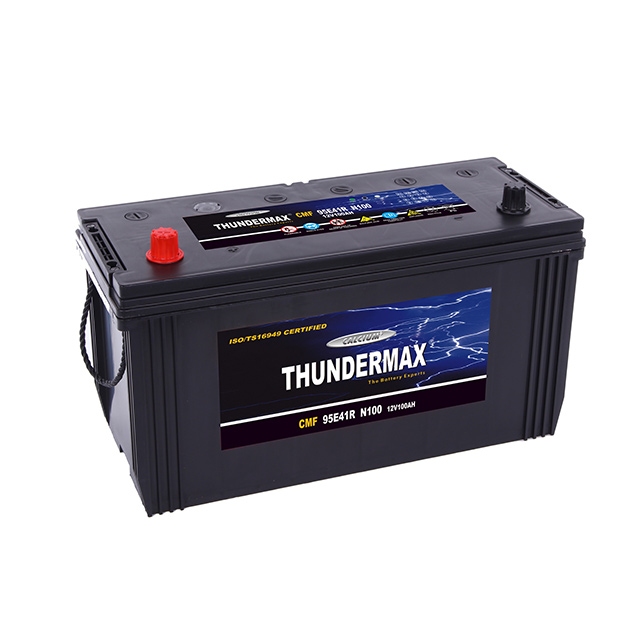
A semi-free maintenance battery utilizes specific internal plate alloys to improve performance. Traditional flooded batteries use lead-antimony grids. Antimony makes the internal plates physically strong but causes heavy water consumption. Semi-free designs typically shift to lead-calcium configurations. These advanced plates drastically reduce water electrolysis. They minimize off-gassing during the charging cycle. However, manufacturers still include removable caps on top. These caps allow technicians to perform rare fluid top-offs if necessary. They bridge older, reliable chemistry with modern chemical efficiency.
We must manage expectations properly. You need to view these batteries through a skeptical, realistic lens. "Semi-free" does not mean "zero maintenance." They still require basic preventative care to survive severe fleet use. You must clean the battery terminals regularly to prevent voltage drops. You need to monitor charge states actively during vehicle downtime. Fluid checks remain necessary, but on a highly reduced schedule. You might check the fluid levels annually rather than performing tedious monthly inspections.
Customization plays a massive role in maximizing longevity. Fleet operations vary wildly by region, climate, and industry. Procuring a Custom semi-free maintenance battery solves very specific operational challenges. Engineers can reinforce internal plates to withstand heavy vibration. This is vital for construction or off-road service trucks. They can also adjust electrolyte volumes for fleets operating in extremely hot, arid climates. Tailoring the internal chemistry ensures maximum lifecycle returns for your specific use case.
Calculating ROI: Are Semi-Free Maintenance Batteries Actually Cost-Effective?
Let us compare the unit cost directly against the market alternatives. The semi-free option sits slightly above standard flooded batteries in base price. However, it remains well below the cost of premium AGM or lithium-ion units. This initial procurement balance makes it highly attractive for large volume purchases. You gain immediate structural upgrades without shocking your accounting department.
Labor savings provide the real financial leverage. Imagine a fleet managing 50 light-duty service vehicles. Standard flooded batteries require roughly 15 minutes of maintenance per car every single month. Technicians must clean terminals, test voltage, and top off distilled water. This equals 150 hours of lost labor annually. Shifting to a semi-free model drops this requirement drastically. Checking them bi-annually recovers hundreds of highly paid labor hours. Your technicians can focus on critical engine repairs and brake jobs instead.
We can model this using a straightforward lifecycle return analysis. We look at three primary financial factors:
Cost Factor A: The base unit price difference between battery types.
Cost Factor B: The reduced routine maintenance multiplied by your shop's hourly labor rate.
Cost Factor C: The mitigation of premature replacement costs. Preventing early failures saves roughly $150 to $300 per vehicle in emergency intervention.
Here is a simplified comparison chart demonstrating the financial shift:
Metric Evaluated
Standard Flooded Battery
Semi-Free Maintenance Battery
AGM Battery
Relative Unit Cost
Lowest (Base)
Low-Medium (+15%)
High (+150%)
Annual Maintenance Time (Per Vehicle)
3 Hours
0.5 Hours
0.2 Hours
Vibration Resistance
Poor
Moderate (Customizable)
Excellent
Estimated ROI Break-Even
N/A
8 to 12 Months
36+ Months
The math generally proves highly positive. Fleets usually see full returns within 8 to 12 months. This assumes you match the batteries correctly to the vehicle's specific electrical load and environmental demands.
Defending Against Fleet Killers: Idling, Sulfation, and Parasitic Drain
Fleet batteries face three primary chemical enemies. The first and most destructive is sulfation. Any lead-acid battery dropping below an 80% charge threshold faces harsh chemical reality. A resting voltage below 12.4V means trouble. Irreversible lead sulfate crystals begin forming on the internal lead plates. This crystallization hardens the battery internally. It permanently reduces energy capacity and cold cranking amps. Once severe sulfation sets in, the battery essentially chokes itself to death.
Parasitic loads accelerate this exact problem. Modern fleet vehicles carry dense onboard technology packages. GPS tracking devices constantly ping satellites. Surveillance dashcams remain active in dark parking lots. Standby communication radios pull continuous currents. These devices drain batteries aggressively during weekend parking or off-season idle times. A vehicle parked from Friday evening to Monday morning can easily drop below the safety threshold. The battery degrades significantly before the driver even turns the key.
Idling compounds the damage further. Delivery and urban service fleets idle extensively. Drivers frequently leave engines running while dropping off packages or filling out paperwork. Unfortunately, low RPM idling often fails to output sufficient alternator current. The alternator produces just enough power to run the headlights and heater. The battery never receives a fully saturated recharge. This chronic undercharging accelerates degradation rapidly. It leaves the battery vulnerable to the next cold morning start.
Implementing a Standardized Fleet Battery Maintenance Protocol
Buying new hardware solves only half the problem. Operational protocols dictate actual battery lifespans. Buying a highly durable semi-free maintenance battery without a care plan wastes money. Hardware requires disciplined process. You need a strict maintenance protocol integrated into your shop routine.
Here is a step-by-step implementation guide for fleet managers:
Baseline Testing: Log the starting Cold Cranking Amps (CCA) and resting voltage immediately upon installation. Record these metrics in your fleet software. This creates an accurate benchmark for future degradation tests.
Smart Charging Integration: Implement a firm parking policy. Vehicles sitting idle for more than 48 to 72 hours must connect to multi-stage smart chargers. Basic trickle chargers will boil the electrolyte. Smart chargers automatically adjust voltage across bulk, absorption, and float stages. They prevent overcharging while dissolving minor sulfation crystals.
Quarterly Audits: Schedule rapid state-of-charge (SOC) and load tests. Pair these quick audits directly with standard oil changes or tire rotations. This prevents technicians from pulling vehicles off the road just for battery checks.
Telematics Tracking: Utilize your existing fleet management software platforms. Set up automated alerts to monitor battery voltage drops remotely. Catch low voltage trends before the vehicle fails to start in the field.
Shortlisting Guide: Should Your Fleet Make the Switch?
Not every fleet needs the exact same power solution. You must evaluate your specific operational demands objectively. Avoid buying premium batteries if standard operations do not justify the cost. Avoid cheap batteries if your downtime costs are catastrophic.
Who Should Buy:
Cost-sensitive fleets operating local delivery routes or mid-size service vehicles.
Managers looking to reduce shop labor hours without demanding massive initial investments from corporate.
Operations located in moderate climates possessing accessible, covered maintenance bays.
Fleets running vehicles with moderate auxiliary power needs.
Who Should Pass:
Heavy-duty fleets working in extreme, freezing weather environments.
High-demand commercial transport facing constant, severe road vibration and chassis shock.
Operations requiring massive deep-cycling capabilities. In these scenarios, fully sealed AGM or Lithium-ion systems offer necessary resistance and deeper discharge cycles.
How should decision-makers proceed? Do not transition your entire fleet overnight. Run a six-month pilot program first. Test the new battery chemistry on just 10% of your vehicles. Benchmark the actual labor savings and failure rates against your historical maintenance data. Track the metrics diligently. This isolated pilot will provide undeniable proof of concept before you commit your full annual budget.
Conclusion
Semi-free maintenance batteries offer a highly pragmatic, ROI-positive solution. They perfectly serve fleets caught between soaring labor costs and tight procurement budgets. By drastically reducing watering schedules, they free up valuable technician hours. By keeping initial costs low, they protect capital expenditure budgets.
True cost-effectiveness is achieved through a holistic approach. It relies on more than just superior battery chemistry. You achieve the longest lifespans by pairing the right hardware with proactive monitoring. Strict charging protocols and quarterly testing ensure the battery reaches its maximum potential. Neglect will still destroy a well-built battery.
We encourage fleet managers to take immediate action. Audit your current annual battery replacement costs today. Calculate the exact labor hours wasted on routine watering and emergency jump-starts. Then, consult with a dedicated manufacturer. Discuss engineering a Custom semi-free maintenance battery solution tailored entirely to your specific operational loads. Small, deliberate protocol changes consistently yield massive lifecycle savings.
FAQ
Q: How often does a semi-free maintenance battery need to be checked?
A: While traditional flooded batteries may require monthly checks, semi-free models generally only require visual and fluid level inspections every 6 to 12 months. This schedule depends heavily on your operating climate and total monthly mileage. Extreme heat will evaporate fluid faster, requiring slightly more frequent visual audits.
Q: Can I use a standard trickle charger on a semi-free maintenance battery?
A: It is highly recommended to use a multi-stage smart charger rather than a basic trickle charger. Smart chargers automatically adjust voltage and float stages. They prevent the battery from "boiling" and losing its internal fluid. Constant trickle charging without voltage regulation causes irreversible internal damage.
Q: Does a custom semi-free maintenance battery void vehicle warranties?
A: No, it does not void warranties. As long as the custom battery meets or exceeds the OEM specifications for Cold Cranking Amps (CCA), Reserve Capacity (RC), and physical group size, it complies entirely with standard commercial vehicle warranty requirements.
Q: Is it better to upgrade directly to AGM instead of semi-free batteries?
A: It depends strictly on your fleet's CapEx limits. AGM batteries offer superior vibration resistance and are completely spill-proof. However, they cost two to three times more upfront. If your fleet avoids extreme off-road conditions and heavy deep-cycle loads, semi-free batteries yield a much faster financial return.