
Views: 0 Author: Site Editor Publish Time: 2026-06-08 Origin: Site
Replacing a battery in a modern start-stop vehicle is no longer a simple swap. Selecting the wrong battery chemistry leads to premature failure, disabled vehicle features, and potential alternator damage. You might feel tempted to install a cheaper, traditional flooded battery. However, doing so guarantees severe electrical issues within months. Traditional batteries lack the robust engineering needed to support continuous high-frequency cycling. When your engine shuts off at a traffic light, heavy accessory loads drain standard units rapidly.
Automakers recognize this massive electrical strain. They established the Enhanced Flooded Battery (EFB) as the specific OEM standard for entry-level start-stop vehicles. It delivers the essential durability to handle modern idle-stop demands safely. In this comprehensive guide, you will learn exactly which vehicles demand an EFB and how to decode confusing OEM labels. We will explain why matching battery chemistry prevents catastrophic electrical failures. You will also discover crucial installation steps to protect your vehicle and your investment.
Standard lead-acid batteries cannot handle the high-frequency cycling of start-stop systems; using them voids warranties and risks electrical failure.
An EFB Start-Stop Car Battery is strictly required for vehicles equipped with basic start-stop systems without regenerative braking.
If your vehicle originally came with an AGM battery, you cannot downgrade to an EFB. However, EFB-equipped vehicles can sometimes be upgraded to AGM.
Battery Management System (BMS) registration is a mandatory step during replacement to ensure the alternator charges the new battery at the correct voltage.
Modern automotive electrical systems operate under extreme stress. Standard lead-acid batteries simply lack the physical architecture to survive these environments. If you install a standard battery in a start-stop vehicle, you invite rapid chemical degradation. We must examine the engineering limitations of traditional batteries to understand why failure occurs so quickly.
A conventional vehicle engine restarts roughly 30,000 to 50,000 times during its operational lifespan. Standard batteries handle this low-frequency cranking perfectly. A start-stop engine operates completely differently. It restarts up to 500,000 times over its lifespan. The starter motor engages at every traffic light, stop sign, and traffic jam. Standard batteries shed active material from their lead plates under this relentless cycling. They lose capacity rapidly and fail.
When a start-stop engine turns off, the alternator stops generating power. However, the vehicle still requires electricity. Infotainment screens remain bright. The HVAC fan continues blowing. Headlights stay illuminated. The battery must carry this entire electrical burden alone. Standard batteries suffer massive deep discharge damage under these idle conditions. Repeated deep discharges cause permanent lead sulfate crystals to form on the plates. This sulfation ruins the battery permanently.
Once the engine restarts, the battery must recharge incredibly fast before the next stop. This rapid recovery requires high Dynamic Charge Acceptance (DCA). Standard batteries possess very poor DCA. They cannot absorb electrical current quickly enough during short driving intervals between stops. As a result, standard batteries operate in a constant state of undercharge. They degrade rapidly and leave drivers stranded.
You cannot guess your vehicle's battery requirements based on physical size alone. Installing an incorrect battery chemistry will trigger dashboard error codes. It will also disable your auto-off functions. You must follow specific evaluation criteria to identify exactly what your vehicle needs.
Automotive engineers design charging systems around specific battery chemistries. The definitive evaluation criterion is simple. If the factory-installed unit bears an "EFB" label, the exact replacement must be an EFB Start-Stop Car Battery or an AGM upgrade. You cannot install a conventional flooded battery. Deviating from this OEM fitment rule alters the entire charging profile. This mismatch damages the battery and stresses the alternator unnecessarily.
You can often identify the required battery by examining the vehicle's technological features. Automakers assign specific chemistries based on electrical load profiles.
Requires EFB: You will find EFBs in entry-level start-stop systems. These typically exist in compact to mid-sized urban vehicles. They feature standard internal combustion engines with basic auto-off functions. They do not capture energy during braking.
Requires AGM (Do not use EFB): You must use Absorbent Glass Mat (AGM) batteries for vehicles featuring regenerative braking systems. Advanced mild hybrids and luxury sedans with massive electrical demands also require AGM. An EFB cannot handle the aggressive voltage spikes generated by regenerative braking.
You must locate the OEM battery specification plate to verify the chemistry. Open your hood and inspect the battery casing. Look for specific industry acronyms. You might see "Enhanced Flooded Battery" spelled out clearly. European manufacturers sometimes use different terminology. Watch for labels reading "AFB" (Advanced Flooded Battery) or "ECM" (Enhanced Cycling Mat). These acronyms are functionally synonymous with EFB technology. If you see any of these markings, your vehicle demands specialized start-stop chemistry.
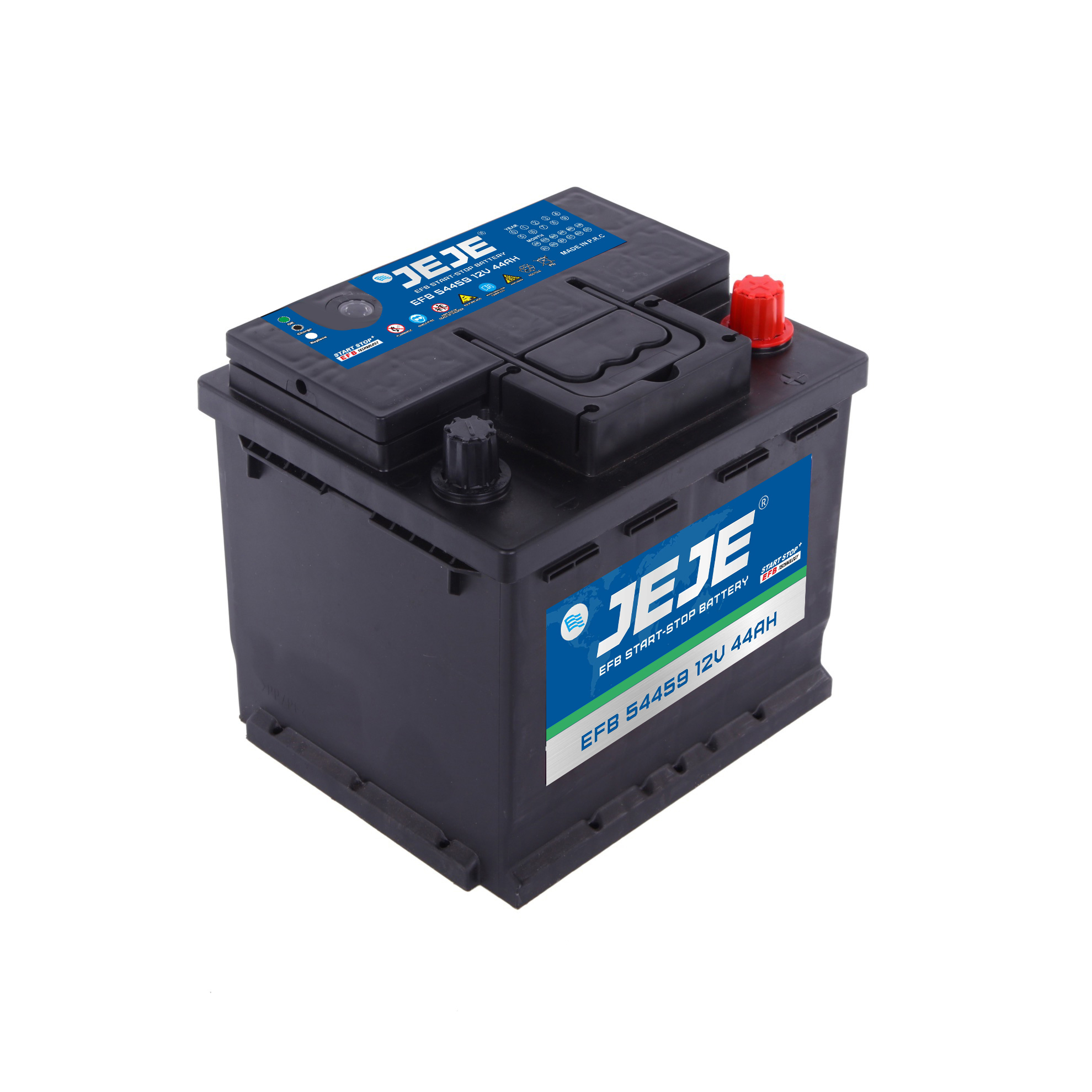
Many drivers feel confused when choosing between EFB and AGM technologies. Both handle start-stop applications effectively. However, they possess different strengths, price points, and thermal thresholds. You must evaluate your driving environment and vehicle specifications before making a choice.
We can evaluate these batteries through a simple performance matrix. EFB technology bridges the gap between conventional batteries and premium AGM units. It offers a lower price point while successfully meeting the minimum cycle-life requirements for standard start-stop operations. AGM provides superior deep-cycle performance and spill-proof safety. However, AGM technology carries a 20% to 40% price premium over EFB.
Below is a comparative chart detailing the core differences:
Evaluation Criterion | EFB (Enhanced Flooded Battery) | AGM (Absorbent Glass Mat) |
|---|---|---|
Cycle Life | Double the cycle life of standard batteries. | Triple the cycle life of standard batteries. |
Price Point | Cost-effective mid-tier pricing. | Premium pricing (20-40% higher). |
Regenerative Braking | Not suitable. | Highly recommended. |
Spill Risk | Contains liquid acid (must remain upright). | Completely spill-proof and sealed. |
Heat destroys batteries faster than cold. EFB technology often performs much better in high-heat environments. Many vehicles house the battery directly inside the hot engine bay. Standard AGM batteries can dry out and fail prematurely under extreme under-hood temperatures. Because an EFB contains free-flowing liquid electrolyte, it dissipates excessive heat effectively. If you live in a notoriously hot climate, an EFB usually outlasts an AGM when mounted under the hood.
Automotive charging systems follow strict hierarchical rules regarding battery chemistry. You must memorize these rules before purchasing a replacement.
Permitted Upgrades: You can safely upgrade from an EFB to an AGM. This move provides better cold-cranking amps (CCA). It also benefits drivers with very short, urban driving profiles. The vehicle's computer easily adapts to the AGM's superior charging acceptance.
Prohibited Downgrades: You must never downgrade from an AGM to an EFB. Vehicles equipped with factory AGM batteries utilize aggressive charging profiles. The alternator pushes higher voltages. This programming will literally boil an EFB, destroying it prematurely.
Commercial operations demand maximum reliability. Standard consumer profiles do not apply to commercial driving schedules. When businesses rely on continuous vehicle operation, battery durability becomes a critical operational metric. Off-the-shelf consumer batteries often fail to meet the rigorous demands of specialized fleet vehicles.
Fleet operators face incredibly aggressive start-stop conditions. Taxis, delivery vans, and municipal vehicles idle continuously. They restart hundreds of times per shift. These vehicles operate heavily burdened with auxiliary electronics, GPS systems, and two-way radios. These electrical strains vastly outpace standard consumer driving profiles. A standard replacement battery will degrade within months under fleet usage. This premature failure causes unacceptable vehicle downtime and disrupts daily operations.
Sometimes standard retail sizes cannot accommodate commercial needs. Fleet managers must evaluate when a Custom EFB Car Battery becomes necessary. Customization solves several unique operational challenges.
Non-standard footprint requirements: Specialized commercial vehicles, retrofitted vans, or imported chassis often feature unusual battery trays. Custom casings ensure a secure, vibration-resistant fit for specialized vehicles.
Enhanced internal architecture: Delivery routes feature high-frequency stops. Custom EFBs integrate thicker lead grids. They utilize proprietary acid-mixing elements to prevent acid stratification during low-speed driving. These enhancements directly address heavy-duty commercial stresses.
Fleet operations thrive on predictability. Bulk-ordering custom EFB solutions ensures consistent performance across all vehicles. Installing the proper heavy-duty chemistry drastically lowers failure rates. Vehicles remain on the road generating revenue rather than sitting in maintenance bays. Standardizing a fleet with robust, customized EFB technology eliminates the frequent replacement cycles associated with off-the-shelf consumer batteries. It stabilizes maintenance schedules entirely.
You cannot simply drop a new battery into a modern vehicle and drive away. Start-stop vehicles feature highly intelligent charging networks. Bypassing modern installation protocols will ruin your new battery immediately. You must understand the risks of improper installation.
Modern vehicles use a Battery Management System (BMS) to monitor battery health. As a battery ages, its internal resistance increases. It requires more voltage to accept a charge. The BMS gradually increases the alternator's charging voltage over several years to compensate for this aging process. The computer remembers the exact degradation level of the old battery.
If you skip BMS registration, the vehicle does not know you installed a fresh battery. The alternator will continue pushing high voltage meant for a dying battery. Installing a fresh EFB Start-Stop Car Battery without resetting the BMS forces the alternator to overcharge the new unit. This severe overcharging boils the electrolyte and warps the internal grids. It effectively halves the lifespan of your brand-new battery within days.
Mechanics follow strict Standard Operating Procedures (SOPs) during battery replacement. You should adhere to these same diagnostic protocols to avoid electrical damage.
Verify configurations: Always check terminal types, polarity layout, and physical dimensions before unbolting anything.
Maintain continuous power: Use an OBD-II memory saver tool. This device provides continuous 12V power to the vehicle's computer during the swap. It prevents the loss of crucial ECU memory, idle relearn data, and radio codes.
Perform the swap safely: Disconnect the negative terminal first to prevent accidental short circuits. Clean the battery clamps thoroughly.
Execute post-installation diagnostics: Connect a diagnostic scan tool to the OBD-II port. Register the new battery chemistry and capacity into the BMS module. Clear any stored undervoltage fault codes from the dashboard.
Replacing a battery in a modern vehicle demands precision. Standard lead-acid batteries fail instantly under the massive electrical loads of idle-stop technology. You must follow strict OEM-matching requirements for start-stop vehicles to guarantee electrical stability. If your vehicle left the factory with an EFB, you must install an EFB or upgrade to an AGM.
Investing in the correct EFB chemistry is a strict risk-mitigation strategy. It is not an optional upgrade. Using the wrong battery voids warranties, disables features, and risks expensive alternator damage. Proper chemistry ensures your vehicle operates exactly as engineered.
Check your current battery label immediately. Look for "EFB", "AFB", or "ECM" designations. Measure your required Cold Cranking Amps (CCA) and Amp-hour (Ah) capacity. Finally, always consult a verified supplier or mechanic equipped with diagnostic tools to perform mandatory BMS registration during installation.
A: No. Installing a normal battery guarantees rapid failure. Standard batteries cannot handle the high-frequency cranking or accessory loads during engine idle. Using one will trigger system warnings, disable the start-stop feature entirely, and potentially burn out your alternator due to excessive charging strain.
A: An EFB typically lasts between 3 and 5 years. The exact lifecycle depends heavily on your local climate, daily driving profile, and proper installation. Regular highway driving extends its life, while extreme under-hood heat and skipped BMS calibration will significantly shorten its expectancy.
A: No. Even if you manually disable the start-stop system via the dashboard button, the vehicle's programmed electrical architecture remains unchanged. The alternator's specific charging algorithms still require the high dynamic charge acceptance of an EFB or AGM to function safely without overcharging.
A: It depends on the application. EFB is highly cost-effective and generally performs better in high-heat environments, like under-hood installations. However, AGM is vastly superior for absolute cycle life, deep discharge recovery, and handling the massive voltage spikes generated by regenerative braking systems.

